Wednesday, June 14, 2023

Add Your Name to Poem to be Launched to Jupiter Moon Europa

Europa in natural color.png

Europa, one of the first two moons of Jupiter to be discovered by famous astronomer Galileo Galilei. This image is in natural color.

(Image Sources: NASA, Jet Propulsion Laboratory, Wikipedia.org, By NASA/JPL-Caltech/SwRI/MSSS/Kevin M. Gill - File:Europa - PJ45-2.png from https://www.missionjuno.swri.edu/junocam/processing?id=13844, CC BY 3.0, https://commons.wikimedia.org/w/index.php?curid=125306643)

By Glenn A. Walsh

Reporting for SpaceWatchtower

NASA is inviting everyone to add their name to a poem that will be launched aboard the Europa Clipper, the latest U.S. unmanned spacecraft which will study Jupiter's icy moon Europa. Etched on the probe as a “Message In A Bottle” will be the poem, "In Praise of Mystery: A Poem for Europa", written by U.S. Poet Laureate Ada Limon (Internet link to the poem transcript near the end of this blog-post).

The Europa Clipper is scheduled to launch from NASA's Kennedy Space Center (Launch Complex 39A) in Florida in mid-to-late October of next year. The tentative launch date is 2024 October 10 (with a 21-day launch window until October 30), with orbital insertion expected 2030 April 11. To reach Europa, the spacecraft will travel 1.8 billion miles / 2.89 billion kilometers.

To add your name to a microchip which will be included on the spacecraft, you must register at the special NASA Internet web-site by 11:59 p.m. Eastern Standard Time (EST) on Sunday, 2023 December 31 / 4:59 Coordinated Universal Time (UTC) on Monday, 2024 January 1. Internet link to NASA web-site for public registration of names on the Europa Clipper can be found near the end of this blog-post.

One of 95 confirmed moons or natural satellites orbiting Jupiter, Europa was one of the first of two moons discovered circling another planet. It was famous astronomer Galileo Galilei who spotted Europa, along with Jupiter moon Io, on 1610 January 8.

It was also observed about the same time by German astronomer Simon Marius, which led to a dispute regarding who was the true discoverer. Although Marius did not report his discovery until a day after Galileo reported the discovery, Marius actually gave the mythological names to the four Galilean Moons. The moon Europa is named after Europa, a Phoenician noblewoman in Greek mythology, daughter of the King of Tyre.

Discovery of Europa and Io, along with Jupiter moons Callisto and Ganymede a few days later (these four moons are known as the Galilean Moons), was a monumental discovery, proving that some planetary objects orbited other planets besides the Earth. This definitively illustrated that the Copernican model of the Solar System is the correct model.

Galileo made this discovery at the University of Padua in Italy. He used the first astronomical refracting telescope, of a 20-power magnification.

Europa is the sixth closest moon to Jupiter, the sixth largest moon in the Solar System, and the smallest of the four Galilean Moons. Europa is just a little smaller than Earth's Moon.

Europa is composed of silicate rock and an iron-nickel core with a water-ice crust and a very thin atmosphere made-up mostly of Oxygen (O2). With the smoothest surface of any solid object in the Solar System, the hypothesis is that Europa has a sub-ice liquid ocean, which could harbor extraterrestrial life.

Tidal Heating, from close proximity to the largest planet in the Solar System, is thought to keep the sub-surface ocean in a liquid state. Eruptions of water vapor plumes, similar to those seen on Saturn's moon Enceladus, have been observed on Europa by the Hubble Space Telescope and the Galileo space probe. It is thought that probes to Europa can sample water from these plumes for composition and possible life, without having to land on the surface and drill into the ice sheet.

The Europa Clipper is not designed to orbit Europa. Scientists have determined this would be too dangerous due to the strong radiation belts emanating from Jupiter which could seriously damage equipment systems on-board the spacecraft.

Instead, the Europa Clipper will enter a very elliptical orbit around Jupiter, which brings the spacecraft close to Europa at a certain portion of the orbit. The Europa Clipper is scheduled to make 44 close fly-bys of the surface of the planetary body. This will allow the space probe to make scientific measurements and observations, while giving it more time to send the data back to Earth during the greater length of time when the radiation belts are not affecting the equipment.

Originally scheduled to launch aboard a NASA Space Launch System (SLS) super heavy-lift rocket (the same rocket set to send astronauts back to the Moon this decade), NASA received permission from the U.S. Congress to use a commercial launch vehicle instead. So, a SpaceX Falcon Heavy rocket will launch the Europa Clipper. The 5.5-year trajectory to the Jovian system will include two gravity-assist maneuvers to provide greater energy for the long trek: with Mars in February of 2025 and with Earth in December of 2026.

The goals of the Europa Clipper mission are to determine if Europa could be inhabited by extraterrestrial life and to scout for appropriate landing sites for a future Europa landing space probe. While examining the water plumes for possible life, scientists will be looking specifically for the three main requirements of life: liquid water (H2O), appropriate chemistry, and energy.

The three objectives scientists will be studying during this mission ---

  • Ice Shell and confirmation that a sub-surface ocean exists;

  • Ocean composition;

  • Geology and characteristics of surface features.

Internet Link to Poem, "In Praise of Mystery: A Poem for Europa":

Link >>> https://www.loc.gov/programs/poetry-and-literature/poet-laureate/poet-laureate-projects/a-poem-for-europa/

Internet Link to “Message In A Bottle” Public Registration for the Poem, "In Praise of Mystery: A Poem for Europa" on NASA's Europa Clipper spacecraft:

Link >>> https://europa.nasa.gov/message-in-a-bottle/sign-on/

 Internet Links to Additional Information ---

Jupiter Moon Europa: Link >>> https://en.wikipedia.org/wiki/Europa_(moon)

Europa Clipper Space Probe -

Link 1 (NASA) >>> https://www.jpl.nasa.gov/missions/europa-clipper 

Link 2 >>> https://en.wikipedia.org/wiki/Europa_Clipper

Tidal Heating: Link >>> https://en.wikipedia.org/wiki/Tidal_heating

Galileo Galilei: Link >>> https://en.wikipedia.org/wiki/Galileo_Galilei

Simon Marius: Link >>> https://en.wikipedia.org/wiki/Simon_Marius

More Poetry Regarding Astronomy & the Space Sciences:

Link >>> https://buhlplanetarium.tripod.com/poetry/

Related Blog-Posts ---

"Laser-Powered Sub to Explore Jupiter Moon Europa ?" Sun., 2018 Oct. 7.

Link >>> http://spacewatchtower.blogspot.com/2018/10/laser-powered-sub-to-explore-jupiter.html


"Deadline to Add Name to NASA Mars Lander: Tuesday Night." Sun., 2015 Sept. 6.

Link >>> http://spacewatchtower.blogspot.com/2015/09/deadline-to-add-name-to-nasa-mars.html

Source: Glenn A. Walsh Reporting for SpaceWatchtower, a project of Friends of the Zeiss          

               Tuesday, 2023 June 14.


                             Like This Post?  Please Share!

           More Astronomy & Science News - SpaceWatchtower Twitter Feed:
            Link >>> https://twitter.com/spacewatchtower

        Astronomy & Science Links: Link >>> http://buhlplanetarium.tripod.com/#sciencelinks

                Want to receive SpaceWatchtower blog posts in your in-box ?
                Send request to < spacewatchtower@planetarium.cc >.

gaw

Glenn A. Walsh, Informal Science Educator & Communicator                                                               (For more than 50 years! - Since Monday Morning, 1972 June 12):
Link >>> http://buhlplanetarium2.tripod.com/weblog/spacewatchtower/gaw/
Electronic Mail: < gawalsh@planetarium.cc >
Project Director, Friends of the Zeiss: Link >>> http://buhlplanetarium.tripod.com/fotz/
SpaceWatchtower Editor / Author: Link >>> http://spacewatchtower.blogspot.com/
Formerly Astronomical Observatory Coordinator & Planetarium Lecturer, original Buhl Planetarium & Institute of Popular Science (a.k.a. Buhl Science Center), America's fifth major planetarium and Pittsburgh's science & technology museum from 1939 to 1991.
Formerly Trustee, Andrew Carnegie Free Library and Music Hall, Pittsburgh suburb of Carnegie, Pennsylvania, the fourth of only five libraries where both construction and endowment funded by famous industrialist & philanthropist Andrew Carnegie.
Author of History Web Sites on the Internet --
* Buhl Planetarium, Pittsburgh: Link >>>  http://www.planetarium.cc  Buhl Observatory: Link >>>  http://spacewatchtower.blogspot.com/2016/11/75th-anniversary-americas-5th-public.html
* Adler Planetarium, Chicago: Link >>> http://adlerplanetarium.tripod.com
* Astronomer, Educator, Optician John A. Brashear: Link >>> http://johnbrashear.tripod.com
* Andrew Carnegie & Carnegie Libraries: Link >>> http://www.andrewcarnegie.cc

 * Other Walsh-Authored Blog & Web-Sites: Link >>> https://buhlplanetarium.tripod.com/gawweb.html

Monday, June 5, 2023

NASA Laser Com-Link Doubles Satellite Data Speed

undefined

 Artist's rendering of a NASA laser communications link aboard the International Space Station. (Image Sources: NASA, Jet Propulsion Laboratory, Wikipedia.org, By NASA/Jet Propulsion Laboratory - NASA&#039;s OPALS to Beam Data From Space Via Laser, Public Domain, https://commons.wikimedia.org/w/index.php?curid=33293907)

By Glenn A. Walsh

Reporting for SpaceWatchtower

NASA, the Massachusetts Institute of Technology (MIT) and other institutions have doubled the rate of data down-loads from an Earth satellite launched last year. A space laser now allows data from the satellite to be received at a rate of 200 gigabytes per second, which doubles the rate of 100 gigabytes per second reached last year.

For the advance of scientific research, Jason Mitchell, an aerospace engineer with NASA's Space Communications and Navigation Program, says of the new milestone “more data means more discoveries”.

During a satellite's typical 5-minute pass overhead, the new data rate will allow the transmission of more than 2 terabytes of data. This is the equivalent of 1,000 high-definition motion pictures.

Within a month of reaching orbit in June of 2022, the laser com-link reached 100 gigabytes per second which is 100 times faster than Internet speeds using fiber optics in most cities and more than 1,000 times faster than traditional satellite radio data speeds.

This advancement comes from the TeraByte InfraRed Delivery (TBIRD) System, which was launched into Earth orbit in May of last year on NASA's Pathfinder Technology Demonstrator 3 (PTD-3) satellite, which uses an infrared laser. TBIRD and PTD-3 were launched from the Cape Canaveral Space Force Station in Florida on 2022 May 25, via SpaceX's Transporter-5 launch vehicle.

The PTD-3 satellite is a ~26.45-pound / 12-kilogram Cube-Sat. The satellite is described as the size of 2 cereal boxes stacked on top of each other. TBIRD is just the size of a tissue box.

This new laser communications system should help with data coming from experiments on the International Space Station (ISS). Currently, much of this data must be returned to Earth via storage drives on cargo spacecraft, due to limitations on down-link rates. TBIRD can particularly help with data regarding Earth climate and resources, as well as astronomy and astrophysics data.

One problem that scientists had to overcome was the technical problems of laser communications. Laser beams tend to distort when traveling from space, due to atmospheric effects and weather conditions. This can cause power loss and data loss.

Scientists have developed an “Automatic Repeat Request” (ARQ) protocol to control the data transmission. A low data rate up-link signal from the ground station alerts the satellite to re-transmit a certain block of data. To increase efficiency, the protocol lets the satellite know which specific data blocks need to be re-sent, so the whole transmission does not have to be repeated.

Another problem with laser beams is their tendency to form narrower beams than radio signals. TBIRD provides the satellite with the proper orientation information, so the laser beam is directed to a specific ground station.

TBIRD can support multiple channels through wavelength separation. This is how TBIRD reached 200 gigabytes per second by using two 100 gigabytes per second channels.

This new laser communications technology can have several new applications:

  • Imaging Black Holes with the Event Horizon Telescope;

  • Satellites in geostationary orbit;

  • Missions to the Moon and eventually Mars and other Solar System destinations;

  • Atmospheric data links: building-to-building and mountaintop-to mountaintop (where the laying of fiber optic cable is not feasible due to technical or financial reasons).

Internet Links to Additional Information ---

Laser Communication in Space:

Link >>> https://en.wikipedia.org/wiki/Laser_communication_in_space

NASA News Release - TeraByte InfraRed Delivery (TBIRD) System:

Link >>> https://www.nasa.gov/feature/goddard/2022/cubesat-set-to-demonstrate-nasas-fastest-laser-link-from-space

MIT TeraByte InfraRed Delivery (TBIRD) System:

Link >>> https://www.ll.mit.edu/sites/default/files/other/doc/2023-02/TVO_Technology_Highlight_12_TBird.pdf

NASA Pathfinder Technology Demonstrator:

Link>>> https://www.nasa.gov/directorates/spacetech/small_spacecraft/Pathfinder_Technology_Demonstrator/

Source: Glenn A. Walsh Reporting for SpaceWatchtower, a project of Friends of the Zeiss          

               Monday, 2023 June 5.


                             Like This Post?  Please Share!

           More Astronomy & Science News - SpaceWatchtower Twitter Feed:
            Link >>> https://twitter.com/spacewatchtower

        Astronomy & Science Links: Link >>> http://buhlplanetarium.tripod.com/#sciencelinks

                Want to receive SpaceWatchtower blog posts in your in-box ?
                Send request to < spacewatchtower@planetarium.cc >.

gaw

Glenn A. Walsh, Informal Science Educator & Communicator                                                               (For more than 50 years! - Since Monday Morning, 1972 June 12):
Link >>> http://buhlplanetarium2.tripod.com/weblog/spacewatchtower/gaw/
Electronic Mail: < gawalsh@planetarium.cc >
Project Director, Friends of the Zeiss: Link >>> http://buhlplanetarium.tripod.com/fotz/
SpaceWatchtower Editor / Author: Link >>> http://spacewatchtower.blogspot.com/
Formerly Astronomical Observatory Coordinator & Planetarium Lecturer, original Buhl Planetarium & Institute of Popular Science (a.k.a. Buhl Science Center), America's fifth major planetarium and Pittsburgh's science & technology museum from 1939 to 1991.
Formerly Trustee, Andrew Carnegie Free Library and Music Hall, Pittsburgh suburb of Carnegie, Pennsylvania, the fourth of only five libraries where both construction and endowment funded by famous industrialist & philanthropist Andrew Carnegie.
Author of History Web Sites on the Internet --
* Buhl Planetarium, Pittsburgh: Link >>>  http://www.planetarium.cc  Buhl Observatory: Link >>>  http://spacewatchtower.blogspot.com/2016/11/75th-anniversary-americas-5th-public.html
* Adler Planetarium, Chicago: Link >>> http://adlerplanetarium.tripod.com
* Astronomer, Educator, Optician John A. Brashear: Link >>> http://johnbrashear.tripod.com
* Andrew Carnegie & Carnegie Libraries: Link >>> http://www.andrewcarnegie.cc

 * Other Walsh-Authored Blog & Web-Sites: Link >>> https://buhlplanetarium.tripod.com/gawweb.html


Monday, May 22, 2023

Citizen Science: Help NASA 'Listen' to the Solar Wind


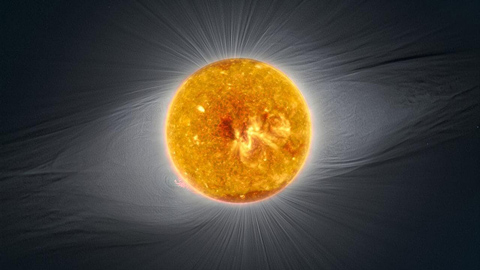
Image showing the Sun and Solar Wind, from the Solar and Heliospheric Observatory satellite, a joint project of NASA and the European Space Agency (ESA). (Image Sources: NASA, ESA)

By Glenn A. Walsh

Reporting for SpaceWatchtower

Help NASA 'listen' to audified particles streaming from the Sun into Outer Space. NASA's HARP Citizen Science Project asks volunteers to use their ears to help scientists pick-out complex wave patterns of the Solar Wind.

Outer Space is far from empty. The Solar Wind consists of charged particles, electrons, and ions, known as Solar Plasma, streaming every minute from the Sun, and probably from other stars in the Universe. But, this stream of particles is not consistent.

When this Solar Wind plasma stream hits the Earth, it causes the magnetic field lines-of-force and the plasma around our planet “to vibrate like the plucked strings of a harp, producing ultralow-frequency waves” according to NASA.

The frequencies of the waves scientists need to measure are too low for the human ear to hear. HARP, the Heliophysics Audified Resonances Plasma Project, is a NASA-sponsored Citizen Science Project which 'audifies' or makes audible the ultra-low frequency waves caused by by the Solar Wind. Citizen Scientists can then help scientists decipher the audible whistles, crunches, and whooshes heard from this stream of solar particles.

“What excites me most about the HARP project is the ability for citizen scientists to make new discoveries in heliophysics research through audio analysis,” said the project’s principal investigator, Michael Hartinger, a heliophysicist at the Space Science Institute in Colorado, in a NASA news release. “We need their help to understand complex patterns in the near-Earth space environment.”

The data that Citizen Scientists will use for this project comes from the THEMIS Mission (Time History of Events and Macroscale Interactions during Substorms), which originally consisted of five satellites launched by NASA in 2007. As part of the THEMIS Mission, the satellites flew through the Magnetosphere, what NASA calls Earth's magnetic “harp”.

So, THEMIS has provided a great deal of data since 2007. However, there is too much data for scientists to evaluate by themselves. According to NASA, “By converting this data into sound and listening with your ears, the brain can pick out complex wave patterns much faster than by eye”.

“THEMIS can sample the whole harp,” Hartinger said, “and it’s been out there a long time, so it has collected a lot of data.”

To learn more about the NASA HARP Project, and to volunteer to participate in the project, go to the following Internet web-site:

Link >>> https://listen.spacescience.org/

Internet Links to Additional Information ---

NASA News Release: "Help Discover the Sounds of Space Played by NASA's HARP."

Link >>> https://www.nasa.gov/feature/goddard/2023/sun/help-discover-the-sounds-of-space-played-by-nasa-s-harp 

NASA THEMIS Mission: Link >>> https://en.wikipedia.org/wiki/THEMIS

Solar Wind: Link >>> https://en.wikipedia.org/wiki/Solar_wind 

Plasma - One of Four States of Matter: Link >>> https://en.wikipedia.org/wiki/Plasma_(physics) 

 Solar and Heliospheric Observatory (SoHO) Satellite:

Link >>> https://en.wikipedia.org/wiki/Solar_and_Heliospheric_Observatory

More Citizen Science Projects: Link >>> https://buhlplanetarium2.tripod.com/FAQ/citizenscience.html

Source: Glenn A. Walsh Reporting for SpaceWatchtower, a project of Friends of the Zeiss          

               Monday, 2023 May 22.


                             Like This Post?  Please Share!

           More Astronomy & Science News - SpaceWatchtower Twitter Feed:
            Link >>> https://twitter.com/spacewatchtower

        Astronomy & Science Links: Link >>> http://buhlplanetarium.tripod.com/#sciencelinks

                Want to receive SpaceWatchtower blog posts in your in-box ?
                Send request to < spacewatchtower@planetarium.cc >.

gaw

Glenn A. Walsh, Informal Science Educator & Communicator                                                               (For more than 50 years! - Since Monday Morning, 1972 June 12):
Link >>> http://buhlplanetarium2.tripod.com/weblog/spacewatchtower/gaw/
Electronic Mail: < gawalsh@planetarium.cc >
Project Director, Friends of the Zeiss: Link >>> http://buhlplanetarium.tripod.com/fotz/
SpaceWatchtower Editor / Author: Link >>> http://spacewatchtower.blogspot.com/
Formerly Astronomical Observatory Coordinator & Planetarium Lecturer, original Buhl Planetarium & Institute of Popular Science (a.k.a. Buhl Science Center), America's fifth major planetarium and Pittsburgh's science & technology museum from 1939 to 1991.
Formerly Trustee, Andrew Carnegie Free Library and Music Hall, Pittsburgh suburb of Carnegie, Pennsylvania, the fourth of only five libraries where both construction and endowment funded by famous industrialist & philanthropist Andrew Carnegie.
Author of History Web Sites on the Internet --
* Buhl Planetarium, Pittsburgh: Link >>>  http://www.planetarium.cc  Buhl Observatory: Link >>>  http://spacewatchtower.blogspot.com/2016/11/75th-anniversary-americas-5th-public.html
* Adler Planetarium, Chicago: Link >>> http://adlerplanetarium.tripod.com
* Astronomer, Educator, Optician John A. Brashear: Link >>> http://johnbrashear.tripod.com
* Andrew Carnegie & Carnegie Libraries: Link >>> http://www.andrewcarnegie.cc

 * Other Walsh-Authored Blog & Web-Sites: Link >>> https://buhlplanetarium.tripod.com/gawweb.html
 

Monday, May 1, 2023

May Day Originated in Astronomy


                                                     April showers bring May flowers !

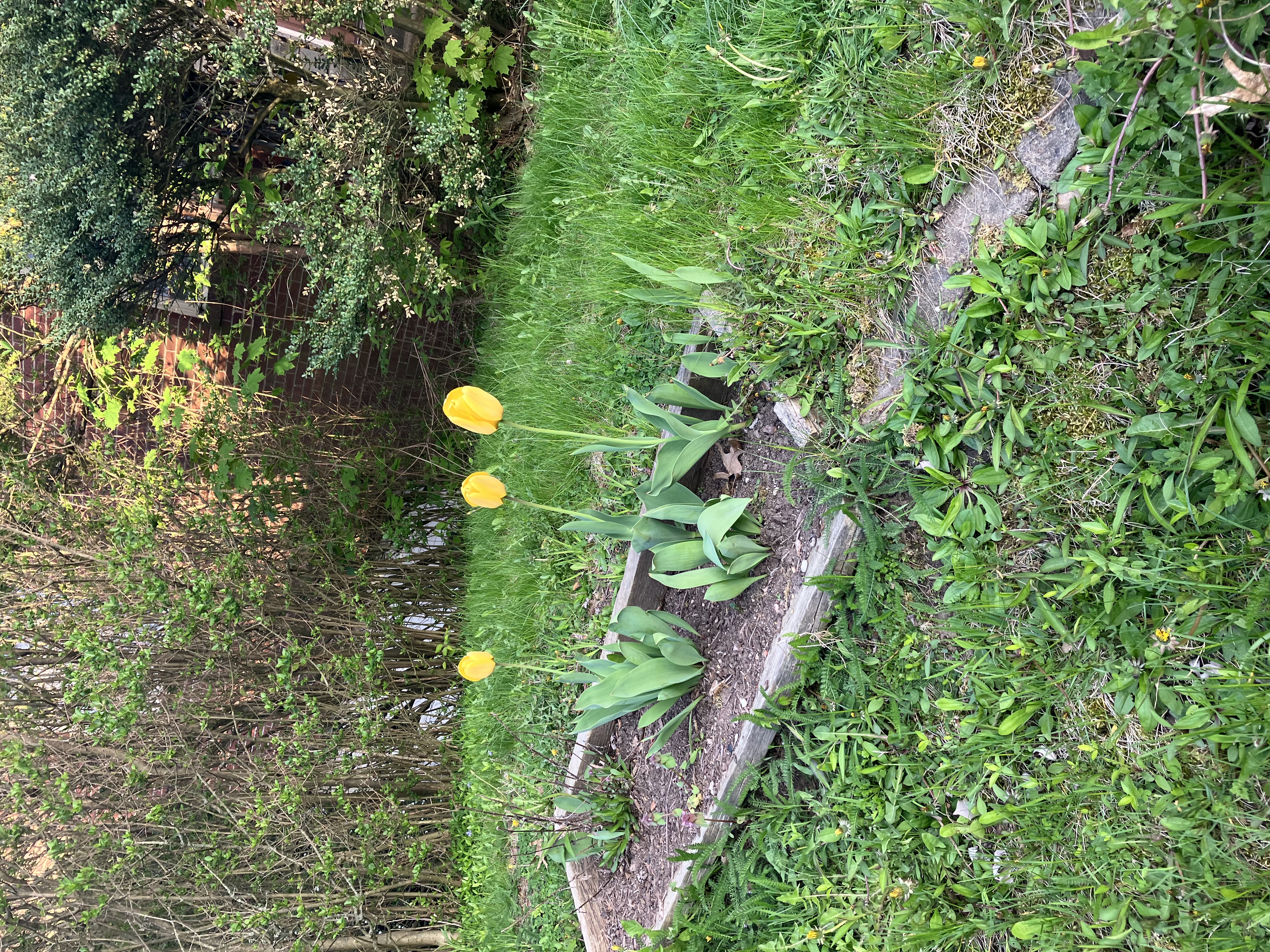
Tulips growing in suburban Pittsburgh this Spring. (Image Source: Friends of the Zeiss; Photographer: Glenn A. Walsh)

By Glenn A. Walsh

Reporting for SpaceWatchtower

Today, May 1, marks the traditional Astronomical Cross-Quarter Day Beltane, better known as May Day.

The actual Astronomical Cross-Quarter Day date varies using the modern Gregorian Calendar. This year, the actual Beltane Cross-Quarter Day occurs on Friday, 2023 May 5 at 8:25 a.m. Eastern Daylight Saving Time (EDT) / 12:25 Coordinated Universal Time (UTC).

While using the ancient Celtic Calendar, May 1 marked the traditional Beltane Cross-Quarter Day, the Gaelic May Day Festival. This festival was widely observed in Ireland, Scotland, and the Isle of Man. In Wales, a similar celebration is known as Calan Mai.

The earliest known such Spring celebrations came during the Roman Republic era. The ancient Roman festival of Floralia (Festival of Flora, the Roman Goddess of Flowers) occurred around this time-of-year (April 27 to May 3).

The ancient Celtic Calendar divided the year into four Gaelic Festival, Quarter Days: Lady Day / Vernal Equinox (March 25), Mid-Summer Day / Summer Solstice (June 24), Michaelmas / Autumnal Equinox (September 29), and Christmas / Winter Solstice (December 25). Then, each Quarter (what we now call a Season) was divided into Cross-Quarter Days: Candlemas / Imbolc / Groundhog Day (February 2), Beltane / May Day (May 1), Lughnasadh / Lammas Day (August 1), and Samhain / Halloween (October 31).

The Celtic Calendar created Beltane, what we now call May Day, as the midway-point between the Vernal Equinox and the Summer Solstice. However, they called the Summer Solstice Mid-Summer, famous today in the name of the Shakespeare play, “A Mid-Summer Night's Dream”.

Beltane, in the Celtic Calendar, was actually considered the beginning of Summer. In ancient times, a Cross-Quarter Day was considered the beginning of a Season, while an Equinox or a Solstice was considered the midway-point in a Season.

Beltane or May Day was a day of agricultural celebration, as crops sown earlier were beginning to sprout. It also marked the time of year when cattle were moved to pastures for Summer grazing. The day marked rituals to protect the cattle, crops, and the parishioners.

It was also a day for young couples to pair-up. However, weddings would not be expected until the Mid-Summer Quarter Day. Even today, many weddings are planned for the month of June.

By the 20th century, Beltane customs fell out-of favor. However, Celtic Neopagans and Wiccans now celebrate customs based on Beltane as a religious holiday.

In the latter part of the 19th century, May Day became connected with the labor movement. 1889 May 1 was chosen as International Workers' Day (in some countries known as Labour Day) by the Second International to commemorate the Chicago Haymarket Riot and the struggle for an eight-hour work day.

In 1955, the Roman Catholic Church dedicated May 1 to “Saint Joseph the Worker”. Saint Joseph is considered the Patron Saint of Workers and Craftsmen, among other workers.

Completely unrelated, in the United States May 1 is also considered Law Day.

Internet Links to Additional Information ---

Beltane: Link >>> https://en.wikipedia.org/wiki/Beltane 

May Day: Link >>> https://en.wikipedia.org/wiki/May_Day 

International Workers' Day: Link >>> https://en.wikipedia.org/wiki/International_Workers%27_Day 

Law Day: Link >>> https://en.wikipedia.org/wiki/Law_Day_(United_States)

Celtic Calendar: Link >>> https://en.wikipedia.org/wiki/Celtic_calendar 

Gregorian Calendar: Link: >>> https://en.wikipedia.org/wiki/Gregorian_calendar

 Related Blog-Posts ---

"Astronomy Needed to Calculate Dates of Passover & Easter." Sun., 2023 April 2.

Link >>> https://spacewatchtower.blogspot.com/2023/04/astronomy-needed-to-calculate-dates-of.html


"Spring Begins at Vernal Equinox Mon. Afternoon." Fri., 2023 March 17.

Link >>> https://spacewatchtower.blogspot.com/2023/03/spring-begins-at-vernal-equinox-mon.html


"Daylight Saving Time Returns - Year-round?" Fri., 2023 March 10.

Link >>> https://spacewatchtower.blogspot.com/2023/03/daylight-saving-time-returns-year-round.html

Source: Glenn A. Walsh Reporting for SpaceWatchtower, a project of Friends of the Zeiss          

               Monday, 2023 May 1.


                             Like This Post?  Please Share!

           More Astronomy & Science News - SpaceWatchtower Twitter Feed:
            Link >>> https://twitter.com/spacewatchtower

        Astronomy & Science Links: Link >>> http://buhlplanetarium.tripod.com/#sciencelinks

                Want to receive SpaceWatchtower blog posts in your in-box ?
                Send request to < spacewatchtower@planetarium.cc >.

gaw

Glenn A. Walsh, Informal Science Educator & Communicator                                                               (For more than 50 years! - Since Monday Morning, 1972 June 12):
Link >>> http://buhlplanetarium2.tripod.com/weblog/spacewatchtower/gaw/
Electronic Mail: < gawalsh@planetarium.cc >
Project Director, Friends of the Zeiss: Link >>> http://buhlplanetarium.tripod.com/fotz/
SpaceWatchtower Editor / Author: Link >>> http://spacewatchtower.blogspot.com/
Formerly Astronomical Observatory Coordinator & Planetarium Lecturer, original Buhl Planetarium & Institute of Popular Science (a.k.a. Buhl Science Center), America's fifth major planetarium and Pittsburgh's science & technology museum from 1939 to 1991.
Formerly Trustee, Andrew Carnegie Free Library and Music Hall, Pittsburgh suburb of Carnegie, Pennsylvania, the fourth of only five libraries where both construction and endowment funded by famous industrialist & philanthropist Andrew Carnegie.
Author of History Web Sites on the Internet --
* Buhl Planetarium, Pittsburgh: Link >>>  http://www.planetarium.cc  Buhl Observatory: Link >>>  http://spacewatchtower.blogspot.com/2016/11/75th-anniversary-americas-5th-public.html
* Adler Planetarium, Chicago: Link >>> http://adlerplanetarium.tripod.com
* Astronomer, Educator, Optician John A. Brashear: Link >>> http://johnbrashear.tripod.com
* Andrew Carnegie & Carnegie Libraries: Link >>> http://www.andrewcarnegie.cc

 * Other Walsh-Authored Blog & Web-Sites: Link >>> https://buhlplanetarium.tripod.com/gawweb.html
 

Monday, April 17, 2023

LIVE-STREAM: Rare Hybrid Solar Eclipse Early Thur. Morning

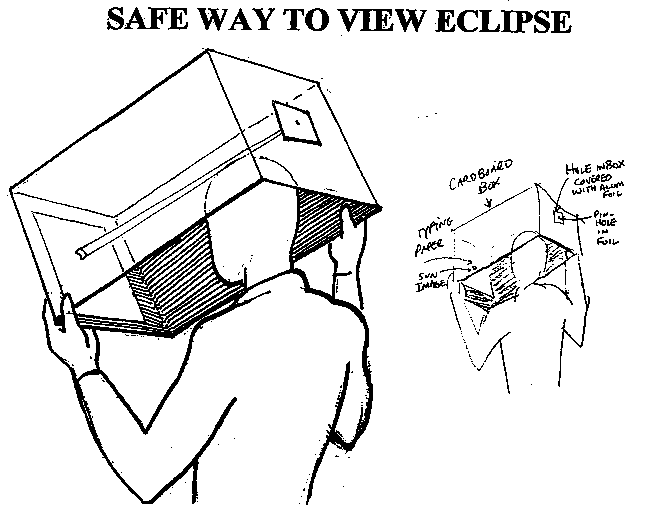
NO PARTIAL PHASE OF ANY SOLAR ECLIPSE / ECLIPSE OF THE SUN, NOR ANY ANNULAR SOLAR ECLIPSE / ANNULAR ECLIPSE OF THE SUN, IS SAFE TO LOOK AT DIRECTLY, UNLESS YOU HAVE THE PROPER TRAINING AND PROPER EQUIPMENT TO DO SO SAFELY; OTHERWISE EYE-SIGHT COULD BE DAMAGED PERMANENTLY !!! This graphic shows one way to safely view the partial phases of a Solar Eclipse / Eclipse of the Sun, or safely view an Annular Solar Eclipse / Annular Eclipse of the Sun, by building a Solar Pinhole Viewing Box (a.k.a. Pinhole Camera) as shown above. After building this box, you must turn your back to the Sun and allow the light from the Sun to go through the pinhole and shine on a white piece of paper on the other end of the inside of the box (NEVER LOOK THROUGH THE PINHOLE AT THE SUN!).
(Graphic Source: Eric G. Canali, former Floor Operations Manager of the original Buhl Planetarium and Institute of Popular Science / Buhl Science Center, America's fifth major planetarium and Pittsburgh's science and technology museum from 1939 to 1991, and Founder of the South Hills Backyard Astronomers amateur astronomy club.)

More Information - SOLAR ECLIPSE / ECLIPSE OF THE SUN: TIPS FOR SAFE VIEWING –

Link >>> https://buhlplanetarium2.tripod.com/FAQ/soleclipse/solareclipseviewingtips.html

By Glenn A. Walsh

Reporting for SpaceWatchtower

Early Thursday morning (2023 April 20), a rare Hybrid Solar Eclipse / Hybrid Eclipse of the Sun (both Total and Annular Solar Eclipse / Eclipse of the Sun) will be visible, weather-permitting, just north and west of Australia. A Live-Stream Internet Web-Cast of the event will be available for those not in the area of the eclipse, or if inclement weather prevents direct viewing of the event.

NEVER LOOK DIRECTLY AT ANY SOLAR ECLIPSE / ECLIPSE OF THE SUN, UNLESS YOU HAVE THE PROPER TRAINING AND PROPER EQUIPMENT TO DO SO SAFELY; OTHERWISE EYE-SIGHT COULD BE DAMAGED PERMANENTLY !!!

Internet link to Live-Stream Web-Cast of 2023 April 20 Hybrid Solar Eclipse / Hybrid Eclipse of the Sun near the end of this blog-post.

WHERE CAN THIS ECLIPSE BE SEEN ?

The path of the 2023 April 20 Hybrid Solar Eclipse / Hybrid Eclipse of the Sun will run from the southern portion of the Indian Ocean to just north of Australia (which will just touch the north-western tip of Australia, known as North West Cape, a remote peninsula of Western Australia). This eclipse concludes north and east of Australia. A Partial Solar Eclipse / Partial Eclipse of the Sun will be visible, weather-permitting, just beyond the confines of the Hybrid Solar Eclipse / Hybrid Eclipse of the Sun.

This eclipse will appear as a Total Solar Eclipse / Total Eclipse of the Sun in the North West Cape Peninsula and Barrow Island of Western Australia, close to the middle of the Eclipse Path. This eclipse will appear as an Annular Solar Eclipse / Annular Eclipse of the Sun. at the beginning of the Eclipse Path (at and near local Sunrise) and at the end of the Eclipse Path (at and near local Sunset).

WHEN CAN THIS ECLIPSE BE SEEN?

This rare Hybrid Solar Eclipse / Hybrid Eclipse of the Sun will be visible, weather-permitting, early on Thursday Morning, 2023 April 20. Although eclipse times will vary for specific locations, the following are the general times for this eclipse. Times are given in Coordinated Universal Time (UTC), the international time used by scientists; subtract 4 hours from the times given for Eastern Daylight Saving Time (EDT) or subtract 5 hours from the times given for Eastern Standard Time (EST). ---

First location to see Partial Eclipse begin: 1:34:26 UTC

First location to see Full Eclipse begin: 2:37:08 UTC

Time of Primary Lunar Phase of New Moon (Lunation #1241): 4:12 UTC

Greatest Eclipse: 4:16:46.8 UTC

Last location to see Full Eclipse end: 5:56:43 UTC

Last location to see Partial Eclipse end: 6:59:22 UTC

WHAT IS ---

A Solar Eclipse / Eclipse of the Sun ?

A Solar Eclipse / Eclipse of the Sun occurs when the Moon comes directly between the Sun and the Earth and part or all of the lunar shadow falls on a portion of our planet. Any Solar Eclipse / Eclipse of the Sun is dangerous to eye-sight to view directly, unless you have the proper training and proper equipment to do so safely! A Solar Eclipse / Eclipse of the Sun always occurs near and at the time of a Primary Lunar Phase of New Moon.

A Total Solar Eclipse / Total Eclipse of the Sun ?

A Total Solar Eclipse / Total Eclipse of the Sun occurs when the Path of the Eclipse includes a Path of Totality, where the Moon completely obscures the Sun for a short length of time for a particular location on the Earth which is within the Path of Totality. At the time of Totality, darkness similar to a deep level of dusk falls on that location, and sometimes scientists with special observing equipment can view Solar Flares and / or Prominences emanating from the Sun. With direct Sunlight completely blocked, the air temperature generally declines noticeably, and birds and other wildlife often begin their night-time routines.

An Annular Solar Eclipse / Annular Eclipse of the Sun ?

An Annular Solar Eclipse / Annular Eclipse of the Sun is somewhat similar to a Total Solar Eclipse / Total Eclipse of the Sun. However, unlike a Total Solar Eclipse / Total Eclipse of the Sun, the Sun is never completely covered by the Moon, for a location in the Path of Annularity, during an Annular Solar Eclipse / Annular Eclipse of the Sun. And, like during a Total Solar Eclipse / Total Eclipse of the Sun, the natural light level acts almost like at dusk, the air temperature generally declines noticeably, and birds and other wildlife are confused and may begin their night-time routines during an Annular Solar Eclipse / Annular Eclipse of the Sun.

During an Annular Solar Eclipse / Annular Eclipse of the Sun while in the Path of Annularity, the Moon blocks-out the vast majority of the Sun, except for the extremely bright edge of the solar disk. Hence, this type of eclipse is often referred to as a “Ring-of-Fire” Solar Eclipse / "Ring-of-Fire" Eclipse of the Sun, as the bright edge appears as a ring-of-fire around the dark Moon.

The reason an Annular Solar Eclipse / Annular Eclipse of the Sun does not completely block-out the Sun's light, as does a Total Solar Eclipse / Total Eclipse of the Sun, is because during an Annular Solar Eclipse / Annular Eclipse of the Sun the Moon is farther from Earth than normal and appears a little smaller as viewed from Earth. Hence, the Moon is too far, and appears too small, to block-out the entire solar disk.

A Hybrid Solar Eclipse / Hybrid Eclipse of the Sun ?

A Hybrid Solar Eclipse / Hybrid Eclipse of the Sun occurs when the eclipse begins as an Annular Solar Eclipse / Annular Eclipse of the Sun, during the middle of the Eclipse Path transitions to a Total Solar Eclipse / Total Eclipse of the Sun, then transitions back to an Annular Solar Eclipse / Annular Eclipse of the Sun as the Eclipse Path ends.

A Partial Solar Eclipse / Partial Eclipse of the Sun ?

A Partial Solar Eclipse / Partial Eclipse of the Sun occurs when only part of the Sun is blocked by the Moon. This is also true during the Partial Phases of a Total, Annular, or Hybrid Solar Eclipse / Total, Annular, or Hybrid Eclipse of the Sun. Usually, more of the Sun is still visible during a Partial Solar Eclipse / Partial Eclipse of the Sun (and during the Partial Phases of other Solar Eclipses / Eclipses of the Sun) than during an Annular Solar Eclipse / Annular Eclipse of the Sun or Hybrid Solar Eclipse / Hybrid Eclipse of the Sun.

There is no time during an Annular Solar Eclipse / Annular Eclipse of the Sun, or during a Partial Solar Eclipse / Partial Eclipse of the Sun (or during the Partial Phases any Solar Eclipse / Eclipse of the Sun), when it is safe to look directly at the eclipse, unless you have the proper training and proper equipment to do so safely!

ECLIPSE PAIRS ---

Eclipses always come in pairs, and sometimes three in-a-row. A Lunar Eclipse / Eclipse of the Moon either precedes a Solar Eclipse / Eclipse of the Sun by a couple weeks, or a Lunar Eclipse / Eclipse of the Moon follows a Solar Eclipse / Eclipse of the Sun by a couple weeks.

This time, a Penumbral Lunar Eclipse / Penumbral Eclipse of the Moon follows on Friday Afternoon, 2023 May 5. This eclipse can be viewed directly [any Lunar Eclipse / Eclipse of the Moon is safe to view with the naked-eyes (one-power), binoculars, or a telescope] from the Indian Ocean, Africa, Eastern Europe, Asia, Australia, and New Zealand. However, a Penumbral Lunar Eclipse / Penumbral Eclipse of the Moon is quite dim and often difficult to discern.

HOW TO SAFELY VIEW ANY SOLAR ECLIPSE / ECLIPSE OF THE SUN ---

  1. Internet - Watch the eclipse on an Internet, Live-Stream Web-Cast (Internet link to Live-Stream Web-Cast near the end of this blog-post). Of course, people outside of the Path of an Eclipse can watch the eclipse on an Internet, Live-Stream Web-Cast, as well as people within the Eclipse Path where clouds obscure the view..

  2. Public Observing Events - Sometimes educational events for eclipse viewing are sponsored by a local planetarium or science museum, astronomical observatory, science department of a local college or high school, amateur astronomy club, or local library.

  3. Solar Pinhole Viewing Box - Create a Solar Pinhole Viewing Box (a.k.a. Pinhole Camera), as displayed and described at the beginning of this blog-post.

  4. “Solar Eclipse Glasses” - For a few dollars you can purchase Solar Eclipse Glasses. However, only use such glasses that are specifically labeled for solar eclipse viewing, preferably approved by the American Astronomical Society (to ensure you do not purchase fake eclipse glasses). Special Note: Solar Eclipse Glasses are very fragile and must be handled gently. Also, before each use during an eclipse, check the glasses by looking through the glasses at a lit light bulb; if you find any holes or tears in the glasses, that pair of glasses could damage your eye-sight during eclipse viewing and should be discarded.

  5. Shade Rating Number 14 Welder's Glass – Shade Rating Number 14 Welder's Glass (and only Welder's Glass Rated at Shade Number 14, the strongest shade available) can be used for safe eclipse viewing, but may be uncomfortable to some because the Sun still appears very bright through this glass.

THESE ARE THE ONLY SAFE WAYS TO VIEW ANY SOLAR ECLIPSE / ECLIPSE OF THE SUN !

INTERNET LINK TO LIVE-STREAM WEB-CAST OF 2023 APRIL 20 ECLIPSE:

Link >>> https://www.timeanddate.com/live/eclipse-solar-2023-april-20

SOLAR ECLIPSE / ECLIPSE OF THE SUN: TIPS FOR SAFE VIEWING – Link >>>     https://buhlplanetarium2.tripod.com/FAQ/soleclipse/solareclipseviewingtips.html

Internet Links to Additional Information ---

Solar Eclipse: Link >>> https://en.wikipedia.org/wiki/Solar_eclipse

Hybrid Solar Eclipse: Link >>> https://en.wikipedia.org/wiki/Solar_eclipse#Types

Related Blog-Posts ---

Hybrid Solar Eclipse: 2013 Nov. 3.

Link >>> http://spacewatchtower.blogspot.com/2013/11/partial-sunrise-solar-eclipse-sunday.html

Hybrid Solar Eclipse: 2005 April 5.

Link >>> https://buhlplanetarium4.tripod.com/eclipse/hybrid2005.html

Source: Glenn A. Walsh Reporting for SpaceWatchtower, a project of Friends of the Zeiss          

               Monday, 2023 April 17.


                             Like This Post?  Please Share!

           More Astronomy & Science News - SpaceWatchtower Twitter Feed:
            Link >>> https://twitter.com/spacewatchtower

        Astronomy & Science Links: Link >>> http://buhlplanetarium.tripod.com/#sciencelinks

                Want to receive SpaceWatchtower blog posts in your in-box ?
                Send request to < spacewatchtower@planetarium.cc >.

gaw

Glenn A. Walsh, Informal Science Educator & Communicator                                                               (For more than 50 years! - Since Monday Morning, 1972 June 12):
Link >>> http://buhlplanetarium2.tripod.com/weblog/spacewatchtower/gaw/
Electronic Mail: < gawalsh@planetarium.cc >
Project Director, Friends of the Zeiss: Link >>> http://buhlplanetarium.tripod.com/fotz/
SpaceWatchtower Editor / Author: Link >>> http://spacewatchtower.blogspot.com/
Formerly Astronomical Observatory Coordinator & Planetarium Lecturer, original Buhl Planetarium & Institute of Popular Science (a.k.a. Buhl Science Center), America's fifth major planetarium and Pittsburgh's science & technology museum from 1939 to 1991.
Formerly Trustee, Andrew Carnegie Free Library and Music Hall, Pittsburgh suburb of Carnegie, Pennsylvania, the fourth of only five libraries where both construction and endowment funded by famous industrialist & philanthropist Andrew Carnegie.
Author of History Web Sites on the Internet --
* Buhl Planetarium, Pittsburgh: Link >>>  http://www.planetarium.cc  Buhl Observatory: Link >>>  http://spacewatchtower.blogspot.com/2016/11/75th-anniversary-americas-5th-public.html
* Adler Planetarium, Chicago: Link >>> http://adlerplanetarium.tripod.com
* Astronomer, Educator, Optician John A. Brashear: Link >>> http://johnbrashear.tripod.com
* Andrew Carnegie & Carnegie Libraries: Link >>> http://www.andrewcarnegie.cc

 * Other Walsh-Authored Blog & Web-Sites: Link >>> https://buhlplanetarium.tripod.com/gawweb.html
Sunday, April 2, 2023

Astronomy Needed to Calculate Dates of Passover & Easter

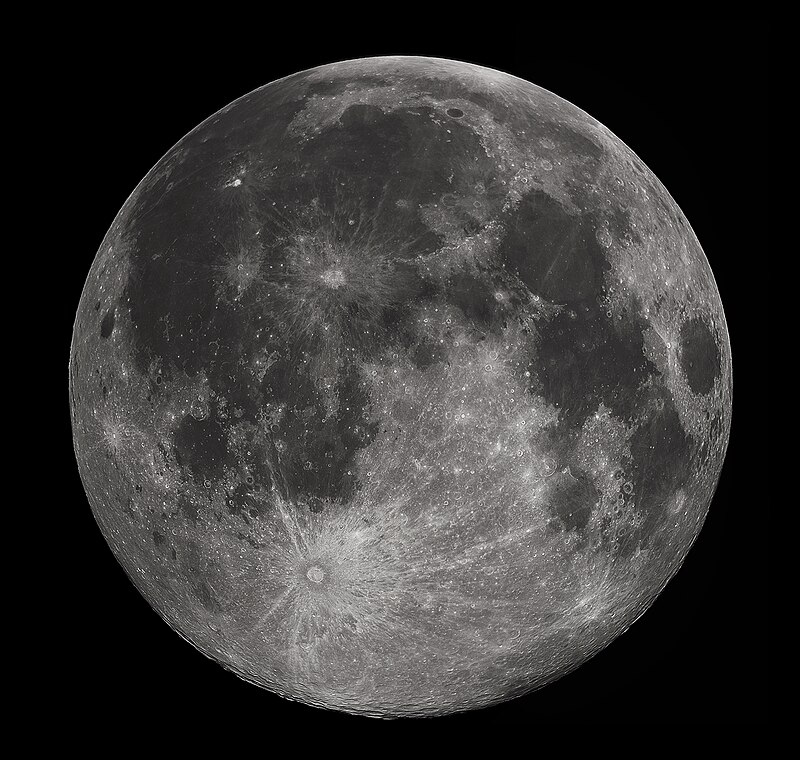
   Full moon in the darkness of the night sky. It is patterned with a mix of light-tone regions and darker, irregular blotches, and scattered with varying sizes of impact craters, circles surrounded by out-thrown rays of bright ejecta.   

For centuries, the Primary Phase of Full Moon figured prominently in the annual calculation of the dates of the beginning of Passover and of Easter. (Image Sources: Wikipedia.org , By Gregory H. Revera - Own work, CC BY-SA 3.0, https://commons.wikimedia.org/w/index.php?curid=11901243 ) 

By Glenn A. Walsh

Reporting for SpaceWatchtower

Each year, Astronomy is used to calculate the date for the beginning of Passover in the Hebrew religion, as well as the date of Easter in the Christian religion. In both cases, the Vernal Equinox which marks the beginning of the season of Spring in Earth's Northern Hemisphere, and the Primary Lunar Phase of Full Moon, are primary parts of the calculation of the two religious festivals.

This year (2023) the Astronomical Vernal Equinox arrived on Monday, March 20 at 5:24 p.m. Eastern Daylight Saving Time (EDT) / 21:24 Coordinated Universal Time (UTC). The first Full Moon following the Vernal Equinox occurs on Thursday, April 6 at 12:34 a.m. EDT / 4:34 UTC. The second Full Moon following the Vernal Equinox will occur on Friday, May 5 at 1:34 p.m. EDT / 17:34 UTC.

This year (2023), the Hebrew festival of Passover (one of the Biblically-ordained Three Pilgrimage Festivals) runs from Wednesday, April 5, beginning at local Sunset, to Thursday, April 13, ending at local Sunset (Internet link to U.S. Naval Observatory web-site, to determine time of local Sunset, near the end of this blog-post).

This year (2023), the Christian festival of Traditional Easter runs (Traditional Easter Holy Week; last week of 40-day Traditional Lent period):

  • Palm Sunday: Sunday, April 2

  • Holy Wednesday: Wednesday, April 5

  • Maundy Thursday / Holy Thursday: Thursday, April 6

  • Good Friday: Friday, April 7

  • Holy Saturday: Saturday, April 8

  • Easter Sunday: Sunday, April 9 (Internet link to U.S. Naval Observatory web-site, to determine time of local Sunrise for Sunrise religious services, near the end of this blog-post):

  • Easter Monday (2nd day of Octave of Easter; public holiday in some nations): Monday, April 10

    This year (2023), the Christian festival of Orthodox Easter runs (Orthodox Easter Holy Week; last week of 40-day Orthodox Lent period):

  • Palm Sunday: Sunday, April 9

  • Great and Holy Wednesday: Wednesday, April 12

  • Great and Holy Thursday: Thursday, April 13

  • Good Friday: Friday, April 14

  • Holy and Great Saturday: Saturday, April 15

  • Easter Sunday: Sunday, April 16 (Internet link to U.S. Naval Observatory web-site, to determine time of local Sunrise for Sunrise religious services, near the end of this blog-post):

  • Bright Monday (2nd day of Bright Week): Monday, April 17

Calculating Date of the Beginning of Passover

Using the traditional Hebrew Calendar, which is a Lunisolar Calendar, the religious festival of Passover begins on the 15th day of the month of Nisan. In the Gregorian Calendar, this presently occurs between March 26 and April 25.

As Passover is a Spring season festival, it typically begins at local Sunset on the evening before the 15th day of the month of Nisan. Actually, in the Hebrew Calendar days officially begin at local Sunset and run until the following local Sunset. This comes from the traditional Rabbinic interpretation of the Hebrew Biblical verse, Genesis 1:5 - “There was evening and there was morning, one day.”

Usually, the 15th day of the month of Nisan begins on the evening of a Full Moon. And, this usually occurs on the first Full Moon after the Vernal Equinox, the official beginning of Spring.

In the Hebrew Calendar, the 1st day of the month of Nisan marks the beginning of the Lunar New Year. In ancient Israel, the 1st day of the month of Nisan would not commence until the Barley was ripe. This was the traditional test for the onset of Spring since, at least, the 4th century.

However, there are times when the Hebrew Calendar includes a Leap-Month. A Leap-Month is inserted into the Hebrew Calendar, to ensure the calendar follows the seasons or Moon phases.

When a Leap-Month in the Hebrew Calendar falls after the Vernal Equinox, sometimes Passover does not begin until the second Full Moon after the Vernal Equinox. The last time this occurred was in the year 2016 of the Gregorian Calendar.

Calculating Date of Easter

Currently, Easter is one of the moveable feasts, with the date determined by a Lunisolar Calendar, similar to the Hebrew Calendar. The difficulty in calculating Easter is due to the fact that our civil calendar does not match astronomical cycles.

A combination of Hebrew, Roman, and Egyptian calendars, along with local culture and customs, all contributed to the Easter calculations we have today. The Egyptians based their calendar on the cycle of the Sun, which was adopted by Roman, and later, Christian cultures. The Hebrew Calendar is based partly on the Lunar Cycle (the Islamic Calendar is also based on the Moon). The Easter calculations become complicated when both lunar and solar calendars are used, combined with the fact that different Christian sects use different mathematical formulas.

Jesus Christ's death and resurrection occurred during the Jewish holiday of Passover (which begins on the night of a Full Moon, immediately after the Vernal Equinox), according to the Christian Bible. However, this led to confusion of what date to celebrate Easter, with Christians celebrating the holiday on different dates.

There was great dissatisfaction expressed by many Christians, in the 3rd and 4th centuries, regarding previous methods of establishing the date of Easter. Originally, they simply used the Jewish festival of Passover and set Sunday of the Passover week as Easter. Some did not like, what they perceived as, the general disorderly state of the Jewish Calendar.

In the year A.D. 325, the First Council of Nicaea of the Roman Catholic Church established only two rules for the annual determination of Easter: independence from the Jewish Calendar and worldwide uniformity. The rules for actual calculation of the date of Easter took centuries to work-out.

Calculating the date of Easter caused several controversies, partly because some Christians did not want Easter to be associated with the Jewish Passover. In at least one case, violence accompanied such a controversy.

The 5th century astronomer and mathematician, Hypatia of Alexandria, Egypt, was murdered (in March of A.D. 415) by a clique of Bishop Cyril's zealots, according to the Church historian Socrates Scholasticus. According to an unconfirmed hypothesis by Canadian mathematician Ari Belenkiy, she had been attempting to calculate the date of Easter, from astronomical observations on the Vernal Equinox.

In A.D. 725, an English monk, the Venerable Bede (later known as Saint Bede), made the general rule for determining the date of Easter, by stating, “The Sunday following the full Moon which falls on or after the equinox will give the lawful Easter.” However, the Ecclesiastical rules are more specific.

Easter was determined to occur on the first Sunday, after the Ecclesiastical or Paschal Full Moon (actually determined to be the 14th day of an Ecclesiastical Lunar Month, determined by the Ecclesiastical New Moon. This date could be a couple days away from the actual, astronomical Full Moon.), which occurs on or soonest after the Vernal Equinox (which is fixed as March 21, even if this Spring Equinox occurs on March 19 or 20, which often happens).

The Ecclesiastical Lunar Month is defined as having only 29 or 30 days (relative to the Sun, the Moon orbits the Earth in about 29.53 days, known as the Synodic Month). Consequently, a Lunar Year of 12 Lunar Months has only 354 days, far shorter than the traditional Solar Year which has 365 days (366 days during a Leap-Year). When the difference in the Ecclesiastical Lunar Year and the Solar Year reaches or exceeds 30 days, then an additional Lunar Month is added to the Ecclesiastical Lunar Year!

One of the reasons the date for Easter varies is due to the use of the Gregorian Calendar, a reform introduced by the Roman Catholic Pope Gregory XIII in 1582. By the Gregorian Calendar, Easter always falls between March 22 and April 25, within about seven days of the actual, astronomical Full Moon. The most common date for Easter, in the Gregorian Calendar, is April 19.

Orthodox or Eastern Catholic churches often do not celebrate Easter the same week as traditional Christians; sometimes the two festivals are a few weeks apart. However, occasionally the Orthodox Holy Week does coincide with the Traditional Holy Week.

Orthodox churches continue to use the Julian Calendar to calculate Easter and other feast days including Christmas Day (January 7). By the Julian Calendar, the March 21 date of the Equinox is equated with April 3 (in our current century), when converted to the Gregorian Calendar used as the civil calendar of all nations where the Orthodox Christianity is predominant. Then, Easter always falls between April 4 and May 8 of the Gregorian Calendar. The Julian Calendar Full Moon is always several days after the actual, astronomical Full Moon, hence, the Orthodox Easter is often later, relative to the visible Moon phases, than the Western Easter.

With the English Reformation between 1532 and 1537, England and English colonies did not comply with the Gregorian calendar reform of 1582, thus remaining with the Julian Calendar. The British Empire did not accept the Gregorian Calendar until 1752. Hence, George Washington was born on February 11 in 1731 by the "Old System" (Julian Calendar), but his birthday is now celebrated on February 22 by the Gregorian Calendar (also, George Washington is now considered to have been born in the year 1732; in the "Old System" calendar, the year 1732 did not begin until March 25).

As reported in SpaceWatchtower on Sunday, 2016 March 27 (Internet link to this report near the end of this blog-post), there has been an effort for many years to fix the actual date of Easter, so Easter would no longer be a movable feast and calculating the date of Easter would be simplified. Since the 2016 report, progress has been limited in the effort to fix the date for Easter.

In November, the Catholic News Agency reported that the Roman Catholic Church and the Eastern Orthodox Church have agreed that the two denominations should celebrate Easter on a common date. Their goal is to come to a common date for Easter in 2025, which would be the 1,700th anniversary of the First Ecumenical Council of Nicea.

One possible obstacle could be tensions between different churches. After Patriarch Bartholomew confirmed in 2018 that the Ecumenical Patriarchate of Constantinople would recognize the independence of the Orthodox Church of Ukraine, the Russian Orthodox Church severed ties with the Patriarchate.

If the date of Easter is ever fixed, Astronomy will no longer be part of this particular determination. But of course, even if Easter is designated as a certain Sunday in March or April, Astronomy will still be needed for the determination of the civil calendar for the actual date Easter falls on each year.

Due to the need to use Astronomy to calculate the date of Easter and other moveable feasts, the Roman Catholic Church has supported an astronomical observatory for several centuries. The Vatican Observatory, originally established as the Observatory of the Roman College of Rome in 1774, is now located in Castel Gandolfo, Italy. The Holy See, since 1993, also operates the Vatican Advanced Technology Telescope at the Mount Graham International Observatory in southeastern Arizona.

In the 1930s and 1940s, a planetarium sky show explaining how Astronomy helped to calculate the date of Easter was shown to the public at several of the early planetaria, including Pittsburgh's original Buhl Planetarium and Institute of Popular Science.

Internet Links to Additional Information ---

U.S. Naval Observatory Web-Site for Computing Local Sunrise & Sunset Times [For locations outside of the United States and its territories, use geographic coordinates (Latitude & Longitude)]:

Link >>> https://aa.usno.navy.mil/data/RS_OneDay

Passover: Link >>> https://en.wikipedia.org/wiki/Passover

Lent Season: Link >>> https://en.wikipedia.org/wiki/Lent 

Easter: Link >>> https://en.wikipedia.org/wiki/Easter

Hebrew Calendar: Link >>> https://en.wikipedia.org/wiki/Hebrew_calendar

Julian Calendar: Link >>> https://en.wikipedia.org/wiki/Julian_calendar

Gregorian Calendar: Link >>> https://en.wikipedia.org/wiki/Gregorian_calendar

Hypatia of Alexandria, Egypt -

Link 1 >>> https://www.change.org/p/canada-s-parliament-commemorating-the-first-female-astronomer-hypatia-of-alexandria

Link 2 >>> https://en.wikipedia.org/wiki/Hypatia

Wimmer, A.C., Catholic News Agency. "Why Catholics and Orthodox might once again celebrate Easter on the same date." 2022 Nov. 18.

Link >>> https://www.catholicnewsagency.com/news/252851/why-catholics-and-orthodox-might-once-again-celebrate-easter-on-the-same-date

Related Blog-Posts ---

"Will Christians Agree to Fix the Date of Easter?" Sun., 2016 March 27.


"Computus: How to Calculate the Date of Easter." Fri., 2014 April 18.

Source: Glenn A. Walsh Reporting for SpaceWatchtower, a project of Friends of the Zeiss          

               Sunday, 2023 April 2.


                             Like This Post?  Please Share!

           More Astronomy & Science News - SpaceWatchtower Twitter Feed:
            Link >>> https://twitter.com/spacewatchtower

        Astronomy & Science Links: Link >>> http://buhlplanetarium.tripod.com/#sciencelinks

                Want to receive SpaceWatchtower blog posts in your in-box ?
                Send request to < spacewatchtower@planetarium.cc >.

gaw

Glenn A. Walsh, Informal Science Educator & Communicator                                                               (For more than 50 years! - Since Monday Morning, 1972 June 12):
Link >>> http://buhlplanetarium2.tripod.com/weblog/spacewatchtower/gaw/
Electronic Mail: < gawalsh@planetarium.cc >
Project Director, Friends of the Zeiss: Link >>> http://buhlplanetarium.tripod.com/fotz/
SpaceWatchtower Editor / Author: Link >>> http://spacewatchtower.blogspot.com/
Formerly Astronomical Observatory Coordinator & Planetarium Lecturer, original Buhl Planetarium & Institute of Popular Science (a.k.a. Buhl Science Center), America's fifth major planetarium and Pittsburgh's science & technology museum from 1939 to 1991.
Formerly Trustee, Andrew Carnegie Free Library and Music Hall, Pittsburgh suburb of Carnegie, Pennsylvania, the fourth of only five libraries where both construction and endowment funded by famous industrialist & philanthropist Andrew Carnegie.
Author of History Web Sites on the Internet --
* Buhl Planetarium, Pittsburgh: Link >>>  http://www.planetarium.cc  Buhl Observatory: Link >>>  http://spacewatchtower.blogspot.com/2016/11/75th-anniversary-americas-5th-public.html
* Adler Planetarium, Chicago: Link >>> http://adlerplanetarium.tripod.com
* Astronomer, Educator, Optician John A. Brashear: Link >>> http://johnbrashear.tripod.com
* Andrew Carnegie & Carnegie Libraries: Link >>> http://www.andrewcarnegie.cc

 * Other Walsh-Authored Blog & Web-Sites: Link >>> https://buhlplanetarium.tripod.com/gawweb.html