Thursday, September 26, 2019

Place Your Name on Mars 2020 Rover Microchip By This Monday, Sept. 30


(Image Sources: NASA, Wikipedia.org, By NASA/JPL-Caltech - http://photojournal.jpl.nasa.gov/jpeg/PIA19672.jpg, Public Domain, https://commons.wikimedia.org/w/index.php?curid=40891664)

By Glenn A. Walsh
Reporting for SpaceWatchtower

NASA is launching another rover to the Planet Mars next year, and they want your name to be part of the spacecraft! Until this-coming Monday, September 30, you can arrange to have your name etched on a microchip which will be sent along on the voyage of the Mars 2020 Rover mission.

And, after you register for the microchip, NASA will even give you a souvenir “boarding pass” as well as “frequent flyer points!” According to NASA, on the last Mars mission, Insight, more than 2 million names of members of the general public flew to Mars with the spacecraft, which provided those members of the public about 300 million frequent flyer miles / 500 million frequent flyer kilometers!

The Mars 2020 Rover is a robotic scientist weighing more than 2,300 pounds / 1,000 kilograms. This latest mission to the Red Planet will search for signs of past microbial life, characterize the planet's climate and geology, collect samples for future return to Earth, and pave the way for human exploration. It is scheduled to launch from the Cape Canaveral Air Force Station (near the Kennedy Space Center in Florida) in July of 2020, with a landing on Mars expected in February of 2021.

"As we get ready to launch this historic Mars mission, we want everyone to share in this journey of exploration," said Thomas Zurbuchen, Associate Administrator for NASA's Science Mission Directorate (SMD) in Washington, DC. "It’s an exciting time for NASA, as we embark on this voyage to answer profound questions about our neighboring planet, and even the origins of life itself.”

You can add your name to the list of names to be etched on a microchip to be included with the Mars 2020 Rover mission, and down-load your souvenir “boarding pass,” at the following Internet link. Remember, the deadline to submit your name for this list is this-coming Monday, September 30, 11:59 p.m. Eastern Daylight Saving Time (EDT) / October 1, 3:59 Coordinated Universal Time (UTC) !!!


Internet Links to Additional Information ---

Mars 2020 Rover:
Link 1 >>> https://mars.jpl.nasa.gov/mars2020/
Link 2 >>> https://en.wikipedia.org/wiki/Mars_2020

Related Blog-Post ---

"Help Astronomers Name Large Kuiper Belt Asteroid." 2019 April 26.

Link >>> https://spacewatchtower.blogspot.com/2019/04/help-astronomers-name-large-kuiper-belt.html


Source: Glenn A. Walsh Reporting for SpaceWatchtower, a project of Friends of the Zeiss.
              Thursday, 2019 September 26.

                             Like This Post?  Please Share!

           More Astronomy & Science News - SpaceWatchtower Twitter Feed:
            Link >>> https://twitter.com/spacewatchtower

        Astronomy & Science Links: Link >>> http://buhlplanetarium.tripod.com/#sciencelinks

                Want to receive SpaceWatchtower blog posts in your in-box ?
                Send request to < spacewatchtower@planetarium.cc >.

gaw

Glenn A. Walsh, Informal Science Educator & Communicator:
http://buhlplanetarium2.tripod.com/weblog/spacewatchtower/gaw/ >
Electronic Mail: < gawalsh@planetarium.cc >
Project Director, Friends of the Zeiss: < http://buhlplanetarium.tripod.com/fotz/ >
SpaceWatchtower Editor / Author: < http://spacewatchtower.blogspot.com/ >
Formerly Astronomical Observatory Coordinator & Planetarium Lecturer, original Buhl Planetarium & Institute of Popular Science (a.k.a. Buhl Science Center), Pittsburgh's science & technology museum from 1939 to 1991.
Formerly Trustee, Andrew Carnegie Free Library and Music Hall, Pittsburgh suburb of Carnegie, Pennsylvania.
Author of History Web Sites on the Internet --
* Buhl Planetarium, Pittsburgh:
  < http://www.planetarium.cc >
* Adler Planetarium, Chicago:
  < http://adlerplanetarium.tripod.com >
* Astronomer, Educator, Optician John A. Brashear:
  < http://johnbrashear.tripod.com >
* Andrew Carnegie & Carnegie Libraries:
  < http://www.andrewcarnegie.cc >

Sunday, September 22, 2019

Autumn Begins at Moment of Equinox Early Monday Morning

   http://buhlplanetarium.tripod.com/pix/graphics/solsticeimage008.png
This diagram shows the position of the Earth, in relation to the Sun, at the time of the Autumnal Equinox, as well as the other equinox and solstices of the year.
(Image Source: ©1999, Eric G. Canali, former Floor Operations Manager of Pittsburgh's original Buhl Planetarium and Institute of Popular Science and Founder of the South Hills Backyard Astronomers amateur astronomy club; permission granted for only non-profit use with credit to author.)

By Glenn A. Walsh
Reporting for SpaceWatchtower

The Autumnal Equinox, the beginning of the season of Autumn or Fall in the Northern Hemisphere of Earth, begins early Monday morning. In Earth's Southern Hemisphere, this equinox marks the astronomical beginning of the season of Spring.

The September Equinox occurs early Monday Morning, 2019 September 23 at 3:50 a.m. Eastern Daylight Saving Time (EDT) / 7:50 Coordinated Universal Time (UTC).

On the day of Equinox, the Sun appears directly overhead at local Noon on the Equator. At the moment of Equinox, the Northern and Southern Hemispheres of Earth are illuminated equally. And, the time of Equinox is the only time when the Earth Terminator (dividing line on Earth between daylight and darkness) is perpendicular to the Equator.

This, and the reason for seasons on Earth in the first place, is due to the fact that Earth rotates on its axis, which is tilted at an approximate 23.44-degree angle from the plane of the Earth's orbit around the Sun. As the Earth revolves around the Sun, this axial tilt causes one hemisphere of the planet to receive more direct solar radiation during that hemisphere's season of Summer and much less direct solar radiation a half-year later during that hemisphere's season of Winter. As mentioned, during an Equinox (about half-way between Summer and Winter, and about half-way between Winter and Summer) both planetary hemispheres receive an equal amount of solar radiation.

Although "Equinox" in Latin means equal-night, the day of the Equinox does not actually have an equal amount of daylight and nightfall, as it appears on the Earth's surface. If the Sun was just a pin-point of light in our sky, as all other stars appear, day and night would be equal.

But, because the Sun is a disk, part of the Sun has risen above the horizon before the center of the Sun (which would be the pin-point of light); so there are extra moments of light on the Equinox. Likewise, part of the Sun is still visible, after the center of the Sun has set.

Additionally, the refraction of sunlight by our atmosphere causes sunlight to appear above the horizon, before sunrise and after sunset.

September 25 will mark the Equilux ("equal-light"), the actual day with equal hours and minutes of the Sun above the horizon, and equal hours and minutes of the Sun below the horizon. The Equilux occurs twice each year, approximately 3-to-4 days before the Vernal Equinox, when Spring begins,  and 3-to-4 days after the Autumnal Equinox.

An urban legend that has been making the rounds for decades has it that eggs can be stood on their ends only during an Equinox, whether the Vernal Equinox in the Spring or the Autumnal Equinox in the Fall. This is completely false. Depending greatly on the size and shape of the particular egg, eggs can be stood on their ends any day of the year! Astronomy has nothing to do with whether an egg can stand on its end. If an egg can stand on its end on the Equinox (and, due to the shape and size of some eggs, this is not even possible), it can stand the same way any other day of the year.

In the last few years, with the help of the Internet and Social Media, another urban legend has become prevalent. Now it is claimed that brooms can stand, on their own, on their bristles, only on an Equinox day. This is also false. Again, as with eggs, if a broom can stand on its bristles by itself (this usually only works with newer brooms, with more even bristles) on an Equinox, it can do so any day of the year!

September 23 is also designated as the annual Falls Prevention Awareness Day for this year.

Internet Links to Additional Information ---


Season of Autumn or Fall: Link >>> http://en.wikipedia.org/wiki/Autumn

Equinox: Link >>> http://en.wikipedia.org/wiki/Equinox

Earth's Seasons: Link >>> http://en.wikipedia.org/wiki/Season

Tilt of a planet's axis: Link >>> http://en.wikipedia.org/wiki/Axial_tilt

Urban legend of eggs and brooms standing on their own, only on an Equinox:
Link >>> http://www.snopes.com/science/equinox.asp

Falls Prevention Awareness Day: Link >>> http://www.ncoa.org/improve-health/center-for-healthy-aging/falls-prevention/falls-prevention-awareness.html

Related Blog Post ---


"2019 Summer Begins at Moment of Solstice, Mid-Day." 2019 June 21.

Link >>> http://spacewatchtower.blogspot.com/2019/06/2019-summer-begins-at-moment-of.html


Source: Glenn A. Walsh Reporting for SpaceWatchtower, a project of Friends of the Zeiss.
              Sunday, 2019 September 22.

                             Like This Post?  Please Share!

           More Astronomy & Science News - SpaceWatchtower Twitter Feed:
            Link >>> https://twitter.com/spacewatchtower

        Astronomy & Science Links: Link >>> http://buhlplanetarium.tripod.com/#sciencelinks

                Want to receive SpaceWatchtower blog posts in your in-box ?
                Send request to < spacewatchtower@planetarium.cc >.

gaw

Glenn A. Walsh, Informal Science Educator & Communicator:
http://buhlplanetarium2.tripod.com/weblog/spacewatchtower/gaw/ >
Electronic Mail: < gawalsh@planetarium.cc >
Project Director, Friends of the Zeiss: < http://buhlplanetarium.tripod.com/fotz/ >
SpaceWatchtower Editor / Author: < http://spacewatchtower.blogspot.com/ >
Formerly Astronomical Observatory Coordinator & Planetarium Lecturer, original Buhl Planetarium & Institute of Popular Science (a.k.a. Buhl Science Center), Pittsburgh's science & technology museum from 1939 to 1991.
Formerly Trustee, Andrew Carnegie Free Library and Music Hall, Pittsburgh suburb of Carnegie, Pennsylvania.
Author of History Web Sites on the Internet --
* Buhl Planetarium, Pittsburgh:
  < http://www.planetarium.cc >
* Adler Planetarium, Chicago:
  < http://adlerplanetarium.tripod.com >
* Astronomer, Educator, Optician John A. Brashear:
  < http://johnbrashear.tripod.com >
* Andrew Carnegie & Carnegie Libraries:
  < http://www.andrewcarnegie.cc >

Tuesday, September 3, 2019

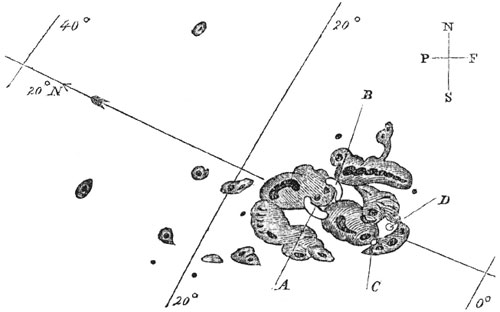
Astro-Calendar: Sep. / 160th Anniv: Carrington Event Solar Mega-Storm

                 
Drawing, by English Amateur Astronomer Richard C. Carrington, of sunspots on the Sun on 1859 September 1, which led to the major Solar Storm of 1859 better known as the Carrington Event. This was one of the first known geomagnetic storms to have major affects on Earth's magnetic field, 1859 September 1 to 2, including great auroral displays (even as far south as Cuba, people could read a newspaper by the bright glow) and caused severe electrical disruptions, electrifying telegraph systems and shocking telegraph operators and technicians (some telegraph systems actually caught fire). Mr. Carrington observed a Solar Flare (the first such observation in history), which is associated with a major, billion-ton Coronal Mass Ejection (CME) which caused the Carrington Event, just before 12:00 Noon on 1859 September 1. Such a solar storm today could bring down electrical grids (which did happen in Quebec in March of 1989), severely disrupt radio communications, destroy the electronics in satellites, and according to a NASA-funded study by the National Academy of Sciences such a storm could cause a trillion dollars in damage to the nation's electronic systems requiring years for recovery. In fact, a Carrington-Class Solar Mega-Storm did occur on the Sun on 2012 July 23, although in this case the CME missed the Earth.
More info at this link: Link >>> https://en.wikipedia.org/wiki/Solar_storm_of_1859
(Image Sources: Wikipedia.org, By Richard Carrington - Page 540 of the Nov-Dec, 2007 issue of American Scientist (volume 95), Public Domain, https://commons.wikimedia.org/w/index.php?curid=4004005)

Astronomical Calendar for 2019 September / 160th Anniversary: Carrington Event Solar Super Storm ---
Link >>> http://buhlplanetarium4.tripod.com/astrocalendar/2019.html#sep

 Related Blog Post ---

"Astro-Calendar: Aug. / Annual Perseid Meteor Shower Peaks Aug. 13"

Thursday, 2019 August 1.

Link >>> https://spacewatchtower.blogspot.com/2019/08/astro-calendar-aug-perseid-meteor.html


Source: Friends of the Zeiss.
              Tuesday, 2019 September 3.

                             Like This Post?  Please Share!

            More Astronomy & Science News - SpaceWatchtower Twitter Feed:
            Link >>> https://twitter.com/spacewatchtower

        Astronomy & Science Links: Link >>> http://buhlplanetarium.tripod.com/#sciencelinks

                Want to receive SpaceWatchtower blog posts in your in-box ?
                Send request to < spacewatchtower@planetarium.cc >.

gaw

Glenn A. Walsh, Informal Science Educator & Communicator:
http://buhlplanetarium2.tripod.com/weblog/spacewatchtower/gaw/ >
Electronic Mail: < gawalsh@planetarium.cc >
Project Director, Friends of the Zeiss: < http://buhlplanetarium.tripod.com/fotz/ >
SpaceWatchtower Editor / Author: < http://spacewatchtower.blogspot.com/ >
Formerly Astronomical Observatory Coordinator & Planetarium Lecturer, original Buhl Planetarium & Institute of Popular Science (a.k.a. Buhl Science Center), Pittsburgh's science & technology museum from 1939 to 1991.
Formerly Trustee, Andrew Carnegie Free Library and Music Hall, Pittsburgh suburb of Carnegie, Pennsylvania.
Author of History Web Sites on the Internet --
* Buhl Planetarium, Pittsburgh:
  < http://www.planetarium.cc >
* Adler Planetarium, Chicago:
  < http://adlerplanetarium.tripod.com >
* Astronomer, Educator, Optician John A. Brashear:
  < http://johnbrashear.tripod.com >
* Andrew Carnegie & Carnegie Libraries:
  < http://www.andrewcarnegie.cc >

Monday, August 19, 2019

Pitt Could Develop 3-D Printed Transplant Organs in Space on ISS

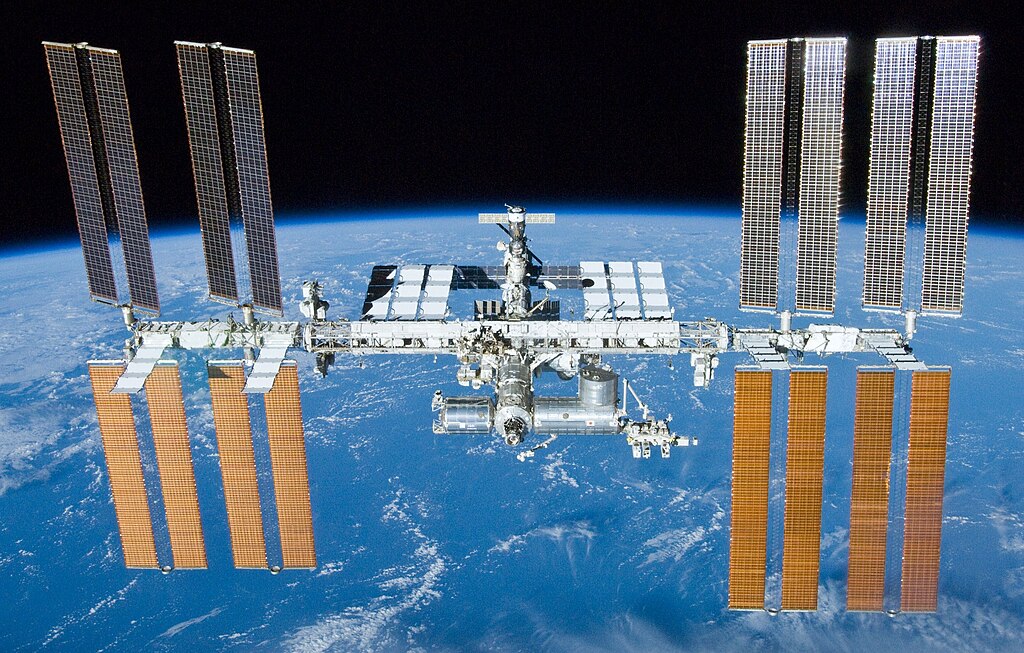
A rearward view of the International Space Station backdropped by the limb of the Earth. In view are the station's four large, gold-coloured solar array wings, two on either side of the station, mounted to a central truss structure. Further along the truss are six large, white radiators, three next to each pair of arrays. In between the solar arrays and radiators is a cluster of pressurised modules arranged in an elongated T shape, also attached to the truss. A set of blue solar arrays are mounted to the module at the aft end of the cluster.
The International Space Station (ISS), operated by the space agencies of the United States, Russia, Japan, Europe, and Canada, has been continuously occupied by humans since 2000 November 2.
(Image Sources: NASA, Wikipedia.org, By NASA/Crew of STS-132 - http://spaceflight.nasa.gov/gallery/images/shuttle/sts-132/hires/s132e012208.jpg(http://spaceflight.nasa.gov/gallery/images/shuttle/sts-132/html/s132e012208.html), Public Domain, https://commons.wikimedia.org/w/index.php?curid=10561008)

By Glenn A. Walsh
Reporting for SpaceWatchtower

The U.S. National Laboratory at the International Space Station (ISS) has announced that research into new biomedical products, possibly including transplant organs, will be spear-headed on the ISS by the McGowan Institute for Regenerative Medicine of the University of Pittsburgh. NASA approached the Pitt researchers last year about leading a multi-year effort on the space station.

This research could include the perfection of techniques to create body parts and organs using 3-D Printers. Without gravity weighing-down gel-like materials, some studies have indicated that 3-D Printers could have greater success creating intricate, human tissues.

Such research, if successful, could lead to a new era when the shortage of body organs would no longer be a major problem. Research in this area is advancing quickly, including the successful implantation of artificial ovaries in mice in May of 2017 and the creation of 3-D-printable water gel at Rutgers University.

While such research is usually funded by the government or academia, McGowan Institute Director Dr. Bill Wagner indicates that funding from the private sector would also be sought. "The whole idea here with the International Space Station is to move it to a point where it's become commercialized and is being supported by the private sector," Dr. Wagner said.

In February of last year, the Trump Administration indicated an interest in privatizing the ISS by 2024, to free-up government funds for the human return to the Moon and later human exploration of Mars. However, last month NASA Administrator Jim Brigantine assured NASA supporters at the annual International Space Station Research and Development Conference that U.S. Government funding for the ISS would remain intact.

The McGowan Institute for Regenerative Medicine at the University of Pittsburgh has a staff of 250 researchers and support people and studies the failure of organs and bodily tissues with the aim to find ways to prevent such failures.

The McGowan Institute looks for ways to enhance the body's natural abilities to heal itself. It is believed that such research in micro-gravity can lead to more medical advances. Although research has been done on the ISS for many years, this Pitt – ISS alliance is the first-of-its-kind.

Internet Links to Additional Information ---

International Space Station:
Link 1 >>> https://www.nasa.gov/mission_pages/station/main/index.html
Link 2 >>> https://en.wikipedia.org/wiki/International_Space_Station

NASA's Research on the International Space Station:
Link >>> https://en.wikipedia.org/wiki/Scientific_research_on_the_International_Space_Station#NASA's_ISS_research_and_science_activity

McGowan Institute for Regenerative Medicine:
Link 1 >>> https://mirm-pitt.net//
Link 2 >>> https://en.wikipedia.org/wiki/McGowan_Institute_for_Regenerative_Medicine

3-D Printing: Link >>> https://en.wikipedia.org/wiki/3D_printing

Source: Glenn A. Walsh Reporting for SpaceWatchtower, a project of Friends of the Zeiss.
              Monday, 2019 August 19.

                             Like This Post?  Please Share!

           More Astronomy & Science News - SpaceWatchtower Twitter Feed:
            Link >>> https://twitter.com/spacewatchtower

        Astronomy & Science Links: Link >>> http://buhlplanetarium.tripod.com/#sciencelinks

                Want to receive SpaceWatchtower blog posts in your in-box ?
                Send request to < spacewatchtower@planetarium.cc >.

gaw

Glenn A. Walsh, Informal Science Educator & Communicator:
http://buhlplanetarium2.tripod.com/weblog/spacewatchtower/gaw/ >
Electronic Mail: < gawalsh@planetarium.cc >
Project Director, Friends of the Zeiss: < http://buhlplanetarium.tripod.com/fotz/ >
SpaceWatchtower Editor / Author: < http://spacewatchtower.blogspot.com/ >
Formerly Astronomical Observatory Coordinator & Planetarium Lecturer, original Buhl Planetarium & Institute of Popular Science (a.k.a. Buhl Science Center), Pittsburgh's science & technology museum from 1939 to 1991.
Formerly Trustee, Andrew Carnegie Free Library and Music Hall, Pittsburgh suburb of Carnegie, Pennsylvania.
Author of History Web Sites on the Internet --
* Buhl Planetarium, Pittsburgh:
  < http://www.planetarium.cc >
* Adler Planetarium, Chicago:
  < http://adlerplanetarium.tripod.com >
* Astronomer, Educator, Optician John A. Brashear:
  < http://johnbrashear.tripod.com >
* Andrew Carnegie & Carnegie Libraries:
  < http://www.andrewcarnegie.cc >

Thursday, August 1, 2019

Astro-Calendar: Aug. / Perseid Meteor Shower Peaks Aug. 13

http://www.nasa.gov/sites/default/files/thumbnails/image/geminid20091209-full.jpg
Time-lapse image of the Meteor Outburst which occurred during the annual Perseid Meteor Shower in 2009. (Image Source: NASA / Jet Propulsion Laboratory)
The 2019 Perseid Meteor Shower peaks 3:00 a.m. EDT / 7:00 UTC on August 13, with the Full Sturgeon Moon two days later. -
More info: Link >>> http://buhlplanetarium4.tripod.com/astrocalendar/2019.html#perseid
Planet Mercury has its best morning appearance for the year on August 9 -
More info: Link >>> http://buhlplanetarium4.tripod.com/astrocalendar/2019.html#mercury 

Astronomical Calendar for 2019 August / Annual Perseid Meteor Shower Peaks Aug. 13  ---
Link >>> http://buhlplanetarium4.tripod.com/astrocalendar/2019.html#aug

 Related Blog Post ---

"Astro-Calendar: July / 50th Anniversary: Humans Land on Moon !"

Monday, 2019 July 1.

Link >>> http://spacewatchtower.blogspot.com/2019/07/astro-calendar-july-50th-anniversary.html


Source: Friends of the Zeiss.
              Thursday, 2019 August 1.

                             Like This Post?  Please Share!

            More Astronomy & Science News - SpaceWatchtower Twitter Feed:
            Link >>> https://twitter.com/spacewatchtower

        Astronomy & Science Links: Link >>> http://buhlplanetarium.tripod.com/#sciencelinks

                Want to receive SpaceWatchtower blog posts in your in-box ?
                Send request to < spacewatchtower@planetarium.cc >.

gaw

Glenn A. Walsh, Informal Science Educator & Communicator:
http://buhlplanetarium2.tripod.com/weblog/spacewatchtower/gaw/ >
Electronic Mail: < gawalsh@planetarium.cc >
Project Director, Friends of the Zeiss: < http://buhlplanetarium.tripod.com/fotz/ >
SpaceWatchtower Editor / Author: < http://spacewatchtower.blogspot.com/ >
Formerly Astronomical Observatory Coordinator & Planetarium Lecturer, original Buhl Planetarium & Institute of Popular Science (a.k.a. Buhl Science Center), Pittsburgh's science & technology museum from 1939 to 1991.
Formerly Trustee, Andrew Carnegie Free Library and Music Hall, Pittsburgh suburb of Carnegie, Pennsylvania.
Author of History Web Sites on the Internet --
* Buhl Planetarium, Pittsburgh:
  < http://www.planetarium.cc >
* Adler Planetarium, Chicago:
  < http://adlerplanetarium.tripod.com >
* Astronomer, Educator, Optician John A. Brashear:
  < http://johnbrashear.tripod.com >
* Andrew Carnegie & Carnegie Libraries:
  < http://www.andrewcarnegie.cc >

Tuesday, July 23, 2019

India Launches Rover to Probe Moon's South Pole


                              http://buhlplanetarium2.tripod.com/observatory/pix/siderostat_moon.jpg
In the 1980s, photographs of the Moon's South Pole, similar to the photo above (which is a photo of the waxing crescent Moon), were taken using the rather unique 10-inch Siderostat-type Refractor Telescope, in the third floor astronomical "People's Observatory" of the original Buhl Planetarium and Institute of Popular Science (a.k.a. Buhl Science Center - Pittsburgh's science and technology museum from 1939 to 1991), by American Lunar Society Founder Francis G. Graham, as part of a national research project to better map the area near the Moon's South Pole. Yesterday, India launched an unmanned rover probe to explore the Moon's South Pole. 
(Image Source: Friends of the Zeiss)

By Glenn A. Walsh
Reporting for SpaceWatchtower

Yesterday (Monday, 2019 July 22), India launched a space probe and rover bound for the South Pole area of Earth's Moon. The launch, which had been delayed since July 15 due to technical problems, came just a couple days after the 50th anniversary of the first humans, American astronauts Neil Armstrong and Buzz Aldrin, to set-foot on the Moon.

If this mission is successful, India will become the fourth Earth nation to soft-land a probe on the Moon. Up until now, only the United States, Russia, and China have successfully soft-landed probes on the Moon. On January 3, China became the first nation to soft-land a probe on the far side of the Moon, the Chang'e 4 Lander and Rover.

On April 11, the Beresheet Lunar Lander, developed by Israel's private SpaceIL organization and launched from Cape Canaveral by SpaceX, attempted a soft-landing on the Moon. However, the robotic probe crashed on the lunar surface due to a main engine failure in the final descent.

The Indian Space Research Organization (ISRO) named the new space probe Chandrayaan-2, which translates from Sanskrit to mean “Moon vehicle.” The probe was launched from the Satish Dhawan Space Center at Sriharikota in Andhra Pradesh state on July 22 at 2:43 p.m. local time / 5:13 a.m. Eastern Daylight Saving Time (EDT) / 9:13 Coordinated Universal Time (UTC).

The first Indian probe sent to the Moon, Chandrayaan-1, was a lunar orbiter and impacter which was launched on 2008 October 22. It entered lunar orbit on 2008 November 8 and operated until August of 2009. In a controlled manner, the Chandrayaan-1 Moon Impact Probe separated from the orbiter and struck near the Shackleton Crater, near the South Pole, on 2008 November 14. The probe strike ejected sub-surface soil, which was analyzed to determine if water-ice was present. After evaluating the data from the impact probe, Indian scientists confirmed that water existed in the lunar soil near the South Pole.

Weighing 3.8 tons, Chandrayaan-2 consists of an orbiter, lander, and rover and carries 13 payloads. It will travel for 2 months before settling into a circular orbit 62 miles / 100 kilometers above the lunar surface around September 7.

The space probe's lander, named Vikram (for Indian space pioneer Vikram Sarabhai), will then land near the South Pole. Vikram will confirm the technology to soft-land on the lunar surface.

A robotic rover named Pragyan (meaning “wisdom”), after separating from the lander, will travel near the South Pole area for 14 days (the amount of time sunlight will be available). Vikram and Pragyan will collect mineral and chemical samples from the lunar surface, sending the data back to India.

The primary goal of the mission is to study the water-ice and determine the amount of water available near the South Pole. This will be important for future human expeditions to the Moon, perhaps as soon as the proposed NASA return to the Moon by 2024. Water from craters near the South Pole, which do not receive any sunlight to melt the ice, can be used by astronauts for drinking water, to create oxygen to breathe, and to create rocket fuel.

The orbiter will map the surface of the Moon and evaluate what can be found of an outer atmosphere of the Moon.

India plans to launch a Chandrayaan-3 mission to the Moon in the 2023-2024 period. In 2014, India became the first Asian nation to put a probe (Mangalyaan) into orbit around the planet Mars. ISRO is also considering putting a probe in orbit of the planet Venus by 2023.

ISRO hopes to send Indian astronauts into Earth orbit by 2022. The Indian space agency also plans on launching their own space station into Earth orbit by 2030.

Even up until the 1980s, the South Pole was one area of the Moon that was not well mapped. As part of a national research project in the 1980s to better map the Moon's South Pole area, photographs of the Moon were taken by American Lunar Society Founder Francis G. Graham using the rather unique 10-inch Siderostat-type Refractor Telescope, in the third floor astronomical observatory of the original Buhl Planetarium and Institute of Popular Science (a.k.a. Buhl Science Center - Pittsburgh's science and technology museum from 1939 to 1991).

Although Buhl Planetarium's “People's Observatory” was primarily used as a public observatory to educate the general public, particularly students, from time-to-time the City of Pittsburgh-owned telescope was used for scientific research.

At the time, Francis G. Graham was a Buhl Planetarium and Observatory Lecturer. Today, he is Professor Emeritus of Physics at Kent State University.

Internet Links to Additional Information ---

Indian Chandrayaan-2 Space Probe:
Link 1 >>> http://www.planetary.org/explore/space-topics/space-missions/chandrayaan-2.html
Link 2 >>> https://nssdc.gsfc.nasa.gov/nmc/spacecraft/display.action?id=CHANDRYN2
Link 3 >>> https://en.wikipedia.org/wiki/Chandrayaan-2

Indian Space Research Organization (ISRO):
Link 1 >>> https://www.isro.gov.in/
Link 2 >>> https://en.wikipedia.org/wiki/Isro

Buhl Planetarium's “People's Observatory” & 10-inch Siderostat-type Refractor Telescope:
Link >>> http://spacewatchtower.blogspot.com/2016/11/75th-anniversary-americas-5th-public.html

Related Blog Posts --

"American Lunar Society Founder on 50th Anniversary: 1st Humans Walk on Moon !, KOKH’S QUESTION: After 50 Years, Why No Lunar Settlements ?"

2019 July 16.

Link >>> http://spacewatchtower.blogspot.com/2019/07/american-lunar-society-founder-on-50th.html


"American Lunar Society Founder on 50th Anniversary: 1st Humans Orbit Moon, The Incredible Legacy of Apollo 8." 2018 December 24.

Link >>> http://spacewatchtower.blogspot.com/2018/12/50th-anniversary-incredible-legacy-of.html


Source: Glenn A. Walsh Reporting for SpaceWatchtower, a project of Friends of the Zeiss.
              Tuesday, 2019 July 23.

                             Like This Post?  Please Share!

           More Astronomy & Science News - SpaceWatchtower Twitter Feed:
            Link >>> https://twitter.com/spacewatchtower

        Astronomy & Science Links: Link >>> http://buhlplanetarium.tripod.com/#sciencelinks

                Want to receive SpaceWatchtower blog posts in your in-box ?
                Send request to < spacewatchtower@planetarium.cc >.

gaw

Glenn A. Walsh, Informal Science Educator & Communicator:
http://buhlplanetarium2.tripod.com/weblog/spacewatchtower/gaw/ >
Electronic Mail: < gawalsh@planetarium.cc >
Project Director, Friends of the Zeiss: < http://buhlplanetarium.tripod.com/fotz/ >
SpaceWatchtower Editor / Author: < http://spacewatchtower.blogspot.com/ >
Formerly Astronomical Observatory Coordinator & Planetarium Lecturer, original Buhl Planetarium & Institute of Popular Science (a.k.a. Buhl Science Center), Pittsburgh's science & technology museum from 1939 to 1991.
Formerly Trustee, Andrew Carnegie Free Library and Music Hall, Pittsburgh suburb of Carnegie, Pennsylvania.
Author of History Web Sites on the Internet --
* Buhl Planetarium, Pittsburgh:
  < http://www.planetarium.cc >
* Adler Planetarium, Chicago:
  < http://adlerplanetarium.tripod.com >
* Astronomer, Educator, Optician John A. Brashear:
  < http://johnbrashear.tripod.com >
* Andrew Carnegie & Carnegie Libraries:
  < http://www.andrewcarnegie.cc >

Tuesday, July 16, 2019

American Lunar Society Founder on 50th Anniversary: 1st Humans Walk on Moon !

     
Historic plaque on the ladder of the Lunar Excursion Module (LEM), "Eagle," commemorating the first human landing site on the Moon. (Image Sources: NASA, Wikipedia.org: Public Domain)

Editor's Note: Precisely 50 years ago, from the time of the posting of this blog-post, NASA's Apollo 11 spacecraft launched from the Kennedy Space Center, Florida at 9:32 a.m. Eastern Daylight Saving Time (EDT) / 13:32 Coordinated Universal Time (UTC) on Wednesday, 1969 July 16. Four days later, Neil Armstrong and Buzz Aldrin would become the first humans to step onto another world, the Earth's Moon. The following is a brief essay regarding the historical and scientific significance of the Apollo 11 mission, as well as possible reasons no crewed mission has returned to the Moon since the Apollo 17 mission in December of 1972. The author of this essay is Francis G. Graham, Professor Emeritus of Physics, Kent State University, and Founder of the American Lunar Society. Earlier in his career, he was a Planetarium and Observatory Lecturer at the original Buhl Planetarium and Institute of Popular Science (a.k.a. Buhl Science Center), Pittsburgh's science and technology museum from 1939 to 1991.

             KOKH’S QUESTION: After 50 Years, Why No Lunar Settlements ?

By Francis G. Graham, Professor Emeritus of Physics, Kent State University
and Founder of the American Lunar Society
Reporting for Spacewatchtower

In the middle of the last century, not yet three fourths complete, human beings did an amazing thing.

They built several large chemical rockets and made a few trips to the Moon and back. The rocket type was the “Saturn V”, which had nothing to do with Saturn; it was a monster of a rocket, of which the preceding rockets were small by comparison. Yet this 360-foot-tall rocket and its associated technology was the minimum needed to accomplish the task with one rocket flight.

But since then, there have been no manned flights to the Moon. There have been no lunar settlements. To the bafflement of 1950’s science fiction writers, humans went to the Moon, and then stopped going there, or even anywhere else except Earth orbit. Prior to the 1960’s, except in the circles of such science fiction writers, talk of going to the Moon was crazy. So it was again in the 1990’s.

Which brings us to Kokh’s Question, named after Peter Kokh, an ardent lunar exploration activist, and founder of the Artemis Society.
.
The question is:“If lunar exploration began in the 1960s, why aren’t there lunar settlements now?”

Click on the Following Link To Continue Reading Professor Graham's Commentary ---

Link >>> http://buhlplanetarium2.tripod.com/weblog/grahamscorner/KOKHs_QUESTION.pdf

Internet Links to Additional Information ---

Apollo 11: Link >>> http://buhlplanetarium4.tripod.com/astrocalendar/2019.html#moonday

Personal Remembrance of Apollo 11 Mission by Glenn A. Walsh:
Link >>> http://buhlplanetarium2.tripod.com/bio/Apolloremembrance.htm

Related Blog Posts ---

"Pittsburgh Museum Displays Historic Apollo 11 Moon Mission Artifacts."

2018 October 24.

Link >>> http://spacewatchtower.blogspot.com/2018/10/pittsburgh-museum-displays-apollo-11.html


"Apollo 11 TV Camera Developer Dies at 91." 2015 Feb. 23.

Link >>> http://spacewatchtower.blogspot.com/2015/02/apollo-11-tv-camera-developer-dies-at-91.html


"45 Years Ago: Man Lands on the Moon !" 2014 July 20.

Link >>> https://spacewatchtower.blogspot.com/2014/07/45-years-ago-man-lands-on-moon.html


"JFK: Loss of the Man Who Sent Us to the Moon." 2013 Nov. 22.

Link >>> http://spacewatchtower.blogspot.com/2013/11/jfk-loss-of-man-who-sent-us-to-moon.html


"Moon Day - A National Holiday ?" 2013 July 20.

Link >>> https://spacewatchtower.blogspot.com/2013/07/moon-day-national-holiday.html


"American Lunar Society Founder on 50th Anniversary: 1st Humans Orbit Moon, The Incredible Legacy of Apollo 8." 2018 December 24.

Link >>> http://spacewatchtower.blogspot.com/2018/12/50th-anniversary-incredible-legacy-of.html


"45th Anniversary: Apollo 8 Orbits the Moon Christmas Eve." 2013 Dec. 24.

Link >>> http://spacewatchtower.blogspot.com/2013/12/45th-anniversary-apollo-8-orbits-moon.html


Source: Francis G. Graham, Professor Emeritus of Physics, Kent State University & Founder of the American Lunar Society.

              Tuesday, 2019 July16.

                             Like This Post?  Please Share!

           More Astronomy & Science News - SpaceWatchtower Twitter Feed:
            Link >>> https://twitter.com/spacewatchtower

        Astronomy & Science Links: Link >>> http://buhlplanetarium.tripod.com/#sciencelinks

                Want to receive SpaceWatchtower blog posts in your in-box ?
                Send request to < spacewatchtower@planetarium.cc >.

gaw

Glenn A. Walsh, Informal Science Educator & Communicator:
http://buhlplanetarium2.tripod.com/weblog/spacewatchtower/gaw/ >
Electronic Mail: < gawalsh@planetarium.cc >
Project Director, Friends of the Zeiss: < http://buhlplanetarium.tripod.com/fotz/ >
SpaceWatchtower Editor / Author: < http://spacewatchtower.blogspot.com/ >
Formerly Astronomical Observatory Coordinator & Planetarium Lecturer, original Buhl Planetarium & Institute of Popular Science (a.k.a. Buhl Science Center), Pittsburgh's science & technology museum from 1939 to 1991.
Formerly Trustee, Andrew Carnegie Free Library and Music Hall, Pittsburgh suburb of Carnegie, Pennsylvania.
Author of History Web Sites on the Internet --
* Buhl Planetarium, Pittsburgh:
  < http://www.planetarium.cc >
* Adler Planetarium, Chicago:
  < http://adlerplanetarium.tripod.com >
* Astronomer, Educator, Optician John A. Brashear:
  < http://johnbrashear.tripod.com >
* Andrew Carnegie & Carnegie Libraries:
  < http://www.andrewcarnegie.cc >