Tuesday, November 4, 2014

ESA's Rosetta Spacecraft Prepares to Land on a Comet

Generally speaking, space missions fall into one of three categories:  difficult, more difficult, and ridiculously difficult.

Flybys are difficult.  A spaceship travels hundreds of millions of miles through the dark void of space, pinpoints a distant planet or moon, and flies past it at 20 to 30 thousand mph, snapping pictures furiously during an achingly brief encounter.

Going into orbit is more difficult. Instead of flying past its target, the approaching spaceship brakes, changing its velocity by just the right amount to circle the planet.  One wrong move and the spacecraft bounces off the atmosphere, becoming an unintended meteor.

Landing is ridiculously difficult.  Just play NASA's "Seven Minutes of Terror" video. Watching Curiosity parachute, retrorocket, and sky-crane its way to the surface of Mars rarely fails to produce goosebumps. Since the Space Age began, the space agencies of Earth have succeeded in landing on only six bodies: Venus, Mars, the Moon, Titan, and asteroids 433 Eros and Itokawa.

splash
A new ScienceCast video previews the first-ever landing on a comet. Play it
In a move that could set a new standard for difficulty, the European Space Agency is about to add a seventh member to the list. On Nov. 12th ESA's Rosetta spacecraft will drop a lander named "Philae" onto the surface of Comet 67P/Churyumov–Gerasimenko. 

More - Link >>> http://science.nasa.gov/science-news/science-at-nasa/2014/03nov_rosettalanding/

Source: NASA Science News.

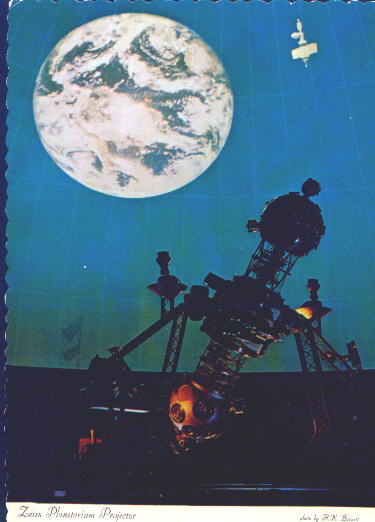
2014: 75th Year of Pittsburgh's Buhl Planetarium Historic Zeiss II Planetarium Projector at Pittsburgh's original Buhl Planetarium and Institute of Popular Science.


Want to receive SpaceWatchtower blog posts in your inbox ?
Send request to < spacewatchtower@planetarium.cc >..

gaw

Glenn A. Walsh, Project Director,
Friends of the Zeiss < http://buhlplanetarium.tripod.com/fotz/ >
Electronic Mail - < gawalsh@planetarium.cc >
SpaceWatchtower Blog: < http://spacewatchtower.blogspot.com/ >
Also see: South Hills Backyard Astronomers Blog: < http://shbastronomers.blogspot.com/ >
Barnestormin: Writing, Essays, Pgh. News, & More: < http://www.barnestormin.blogspot.com/ >
About the SpaceWatchtower Editor / Author: < http://buhlplanetarium2.tripod.com/weblog/spacewatchtower/gaw/ >
SPACE & SCIENCE NEWS, ASTRONOMICAL CALENDAR:
< http://buhlplanetarium.tripod.com/#news >
Twitter: < https://twitter.com/spacewatchtower >
Facebook: < http://www.facebook.com/pages/SpaceWatchtower/238017839577841?sk=wall >
Author of History Web Sites on the Internet --
* Buhl Planetarium, Pittsburgh:
  < http://www.planetarium.cc >
* Adler Planetarium, Chicago:
  < http://adlerplanetarium.tripod.com >
* Astronomer, Educator, Optician John A. Brashear:
  < http://johnbrashear.tripod.com >
* Andrew Carnegie & Carnegie Libraries:
  < http://www.andrewcarnegie.cc >
* Civil War Museum of Andrew Carnegie Free Library:
  < http://garespypost.tripod.com >
* Duquesne Incline cable-car railway, Pittsburgh:
  < http://inclinedplane.tripod.com >
* Public Transit:
  < http://andrewcarnegie2.tripod.com/transit >

Saturday, November 1, 2014

Astronomical Calendar: 2014 November

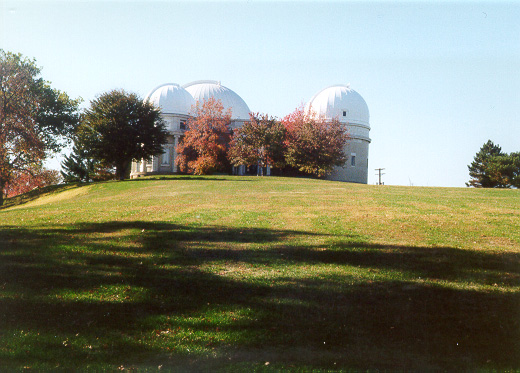
New 1912 Allegheny Observatory Building
Pittsburgh's Allegheny Observatory provided the precise time signals, via telegraph,
which permitted the establishment of five North American standard time zones on
1883 November 18. America returns to Standard Time, from Daylight Saving Time,
on Sunday, November 2 at 2:00 a.m. (Image Source: Friends of the Zeiss)

Astronomical Calendar for 2014 November:

Link >>> http://buhlplanetarium4.tripod.com/astrocalendar/2014.html#nov


The current month's Astronomical Calendar can also be found on the cover page of the History of The Buhl Planetarium and Institute of Popular Science, Pittsburgh web site at this link:

Link >>> http://buhlplanetarium.tripod.com/#astrocal


Source: Friends of the Zeiss.

2014: 75th Year of Pittsburgh's Buhl Planetarium Historic Zeiss II Planetarium Projector at Pittsburgh's original Buhl Planetarium and Institute of Popular Science.


Want to receive SpaceWatchtower blog posts in your inbox ?
Send request to < spacewatchtower@planetarium.cc >..

gaw

Glenn A. Walsh, Project Director,
Friends of the Zeiss < http://buhlplanetarium.tripod.com/fotz/ >
Electronic Mail - < gawalsh@planetarium.cc >
SpaceWatchtower Blog: < http://spacewatchtower.blogspot.com/ >
Also see: South Hills Backyard Astronomers Blog: < http://shbastronomers.blogspot.com/ >
Barnestormin: Writing, Essays, Pgh. News, & More: < http://www.barnestormin.blogspot.com/ >
About the SpaceWatchtower Editor / Author: < http://buhlplanetarium2.tripod.com/weblog/spacewatchtower/gaw/ >
SPACE & SCIENCE NEWS, ASTRONOMICAL CALENDAR:
< http://buhlplanetarium.tripod.com/#news >
Twitter: < https://twitter.com/spacewatchtower >
Facebook: < http://www.facebook.com/pages/SpaceWatchtower/238017839577841?sk=wall >
Author of History Web Sites on the Internet --
* Buhl Planetarium, Pittsburgh:
  < http://www.planetarium.cc >
* Adler Planetarium, Chicago:
  < http://adlerplanetarium.tripod.com >
* Astronomer, Educator, Optician John A. Brashear:
  < http://johnbrashear.tripod.com >
* Andrew Carnegie & Carnegie Libraries:
  < http://www.andrewcarnegie.cc >
* Civil War Museum of Andrew Carnegie Free Library:
  < http://garespypost.tripod.com >
* Duquesne Incline cable-car railway, Pittsburgh:
  < http://inclinedplane.tripod.com >
* Public Transit:
  < http://andrewcarnegie2.tripod.com/transit >
Thursday, October 30, 2014

'War of the Worlds' Panic Broadcast Remembered by NJ Woman

War of the worlds4

By Glenn A. Walsh
Reporting for SpaceWatchtower

At the age of 4 years-old, Joan Geraci remembers the fear of her grandparents when their family suddenly and mysteriously abandoned the regular floors of their southern New Jersey farmhouse for an unfinished cellar constructed completely of dirt. She and her 3-year-old brother did not know that their grandparents were responding to, what was thought as, radio news reports of Martians landing in central New Jersey and attacking the local populace.

Of course, what they actually heard on the radio was the first portion of the radio drama, "The War of the Worlds" on CBS Radio's Mercury Theater on the Air, hosted by a young rising radio star named Orson Welles. This evening will mark the 76th anniversary of the historic radio broadcast, which captivated and frightened many people across the nation.

Now age 80, Joan Geraci remembers being afraid, after seeing how frightened her grandparents were. However, she particularly remembers being cold, as someone got the idea that wet blankets could prevent them from dying from poisonous gas. Water from a well  was used to wet blankets, and the wet blankets covered the family members.

The farmhouse had no telephone, so the family had no way to check with others to confirm the existence of the Martian invasion. And, the cellar had no electricity, so they could not listen to the ending of the radio program, when Orson Welles confirmed that it was simply a radio drama. So the family stayed in this cellar for most of the night, with but one gas light, until a friend of the grandfather finally convinced them to return back upstairs.

Joan Geraci's son, Ron Garaci who authors the blog, The Minty Plum, recounts his mother's recollections of that strange evening in the cellar in a blog post that was sent to SpaceWatchtower this morning.

Here is Ron's complete blog post: Link >>> http://themintyplum.com/?p=2909

Related Blog Post ---

'War of the Worlds' Panic Broadcast: 75th Anniversary (2013 Oct. 29):

Link >>> http://spacewatchtower.blogspot.com/2013/10/war-of-worlds-panic-broadcast-75th.html


Source: Glenn A. Walsh, Reporting for SpaceWatchtower, a project of Friends of the Zeiss.

2014: 75th Year of Pittsburgh's Buhl Planetarium Historic Zeiss II Planetarium Projector at Pittsburgh's original Buhl Planetarium and Institute of Popular Science.


Want to receive SpaceWatchtower blog posts in your inbox ?
Send request to < spacewatchtower@planetarium.cc >..

gaw

Glenn A. Walsh, Project Director,
Friends of the Zeiss < http://buhlplanetarium.tripod.com/fotz/ >
Electronic Mail - < gawalsh@planetarium.cc >
SpaceWatchtower Blog: < http://spacewatchtower.blogspot.com/ >
Also see: South Hills Backyard Astronomers Blog: < http://shbastronomers.blogspot.com/ >
Barnestormin: Writing, Essays, Pgh. News, & More: < http://www.barnestormin.blogspot.com/ >
About the SpaceWatchtower Editor / Author: < http://buhlplanetarium2.tripod.com/weblog/spacewatchtower/gaw/ >
SPACE & SCIENCE NEWS, ASTRONOMICAL CALENDAR:
< http://buhlplanetarium.tripod.com/#news >
Twitter: < https://twitter.com/spacewatchtower >
Facebook: < http://www.facebook.com/pages/SpaceWatchtower/238017839577841?sk=wall >
Author of History Web Sites on the Internet --
* Buhl Planetarium, Pittsburgh:
  < http://www.planetarium.cc >
* Adler Planetarium, Chicago:
  < http://adlerplanetarium.tripod.com >
* Astronomer, Educator, Optician John A. Brashear:
  < http://johnbrashear.tripod.com >
* Andrew Carnegie & Carnegie Libraries:
  < http://www.andrewcarnegie.cc >
* Civil War Museum of Andrew Carnegie Free Library:
  < http://garespypost.tripod.com >
* Duquesne Incline cable-car railway, Pittsburgh:
  < http://inclinedplane.tripod.com >
* Public Transit:
  < http://andrewcarnegie2.tripod.com/transit >

Tuesday, October 28, 2014

HOAX: 6 Days of Total Darkness in December

NASA administrator Charles Bolden
NASA administrator Charles Bolden was the supposed authoritative voice behind the news from Huzlers.com that six days of darkness would happen in December.
(Photo : Paul E. Alers)


By Dianne Depra, Tech Times

One of the best things about the Internet is the speed at which it allows information to be shared. Unfortunately, this means all information -- even false ones like the news about the six-day darkness that would envelop the world in December.

The report "NASA Confirms Earth Will Experience 6 Days of Total Darkness in December 2014" was published by Huzlers.com. Considering the site labeled itself as offering "a combination of real shocking news and satirical entertainment to keep its visitors in a state of disbelief," the story should have been taken with a grain of salt at the very least.

According to the story, NASA "confirmed" that the Earth would be experiencing six days of nearly complete darkness from Dec. 16 to 22. The event would supposedly happen because of a solar storm that would spur enough dust and debris in space that 90 percent of sunlight would be blocked out.

More - Link >>> http://www.techtimes.com/articles/18813/20141028/nasa-viral-news-on-days-of-darkness-in-december-is-hoax.htm

Source: TechTimes.com .

Original Story from Huzlers.com:
Link >>> http://huzlers.com/nasa-confirms-earth-will-experience-6-days-total-darkness-december-2014/

2014: 75th Year of Pittsburgh's Buhl Planetarium Historic Zeiss II Planetarium Projector at Pittsburgh's original Buhl Planetarium and Institute of Popular Science.


Want to receive SpaceWatchtower blog posts in your inbox ?
Send request to < spacewatchtower@planetarium.cc >..

gaw

Glenn A. Walsh, Project Director,
Friends of the Zeiss < http://buhlplanetarium.tripod.com/fotz/ >
Electronic Mail - < gawalsh@planetarium.cc >
SpaceWatchtower Blog: < http://spacewatchtower.blogspot.com/ >
Also see: South Hills Backyard Astronomers Blog: < http://shbastronomers.blogspot.com/ >
Barnestormin: Writing, Essays, Pgh. News, & More: < http://www.barnestormin.blogspot.com/ >
About the SpaceWatchtower Editor / Author: < http://buhlplanetarium2.tripod.com/weblog/spacewatchtower/gaw/ >
SPACE & SCIENCE NEWS, ASTRONOMICAL CALENDAR:
< http://buhlplanetarium.tripod.com/#news >
Twitter: < https://twitter.com/spacewatchtower >
Facebook: < http://www.facebook.com/pages/SpaceWatchtower/238017839577841?sk=wall >
Author of History Web Sites on the Internet --
* Buhl Planetarium, Pittsburgh:
  < http://www.planetarium.cc >
* Adler Planetarium, Chicago:
  < http://adlerplanetarium.tripod.com >
* Astronomer, Educator, Optician John A. Brashear:
  < http://johnbrashear.tripod.com >
* Andrew Carnegie & Carnegie Libraries:
  < http://www.andrewcarnegie.cc >
* Civil War Museum of Andrew Carnegie Free Library:
  < http://garespypost.tripod.com >
* Duquesne Incline cable-car railway, Pittsburgh:
  < http://inclinedplane.tripod.com >
* Public Transit:
  < http://andrewcarnegie2.tripod.com/transit >
Friday, October 24, 2014

75th Anniversary of America's 5th Major Planetarium

http://buhlplanetarium2.tripod.com/Buhlbook1956.JPG
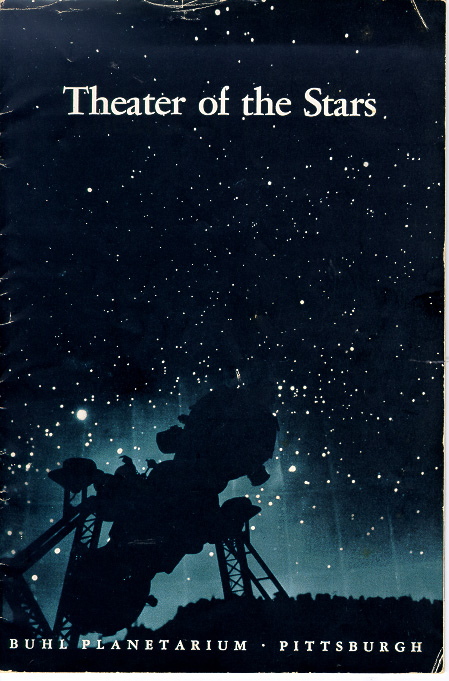
Photograph of the historic Zeiss Mark II Planetarium Projector
during a performance in the Theater of the Stars of Pittsburgh's
original Buhl Planetarium and Institute of Popular Science, which
celebrates their 75th anniversary on October 24 and 25. This photograph
comes from the cover of a small informational book about Buhl
Planetarium published in 1956. (Image Source: Friends of the Zeiss)

By Glenn A. Walsh
Reporting for SpaceWatchtower

Seventy-five years ago this hour, The Buhl Planetarium and Institute of Popular Science was formally dedicated with the fifth Zeiss II Planetarium Projector installed in America. Previously, Zeiss II Planetarium Projectors had been installed at Adler Planetarium in Chicago (1930), Fels Planetarium at Franklin Institute in Philadelphia (1933), Griffith Observatory in Los Angeles (1935), and Hayden Planetarium at the American Museum of Natural History in New York City (1935). It was at this 1939 dedication that the Buhl Foundation gifted and legally conveyed the Buhl Planetarium building, and all contents of the building, to the City of Pittsburgh.

It was on Tuesday Evening, 1939 October 24 at 8:30 p.m  EST that the dedication ceremony began. As Daylight Saving Time was not observed in 1939, this blog post has been posted at 9:30 p.m. EDT, exactly 75 years to-the-moment of the beginning of the dedication ceremony.

The grand public opening of Buhl Planetarium came the next day, Wednesday Morning, 1939 October 25 at 10:00 a.m. EST. The first public planetarium show, "Stars Over Pittsburgh," began at 3:00 p.m. EST, with additional shows at 8:00 and 9:00 p.m. At that time, The Buhl Planetarium and Institute of Popular Science opened seven days a week at 10:00 a.m., closing each day at 10:00 p.m.

It was closed only one day out of the year. Originally, that one day was New Year's Day. Later on, in the 1960s, they elected to stay open New Year's Day and close on Christmas Day.

The building's five public exhibit galleries (with a total of 15,000 square feet of exhibition space), the Institute of Popular Science, was free-of-charge the first year, while a small charge was levied for attendance to a planetarium show. About a year later, a small charge for building admission was added, to solve the problem of the homeless coming in just to take advantage of the heating or air-conditioning (Buhl Planetarium was the first publicly-owned building in the city, and possibly the state, built with air-conditioning), a problem public libraries continue to have.

The opening of The Buhl Planetarium and Institute of Popular Science was a big deal, particularly coming in the middle of the Great Depression. At that time, Pittsburgh only had a few major museums. Andrew Carnegie had opened his two big museums, The Carnegie Museum of Natural History and The Carnegie Museum of Art, in 1895 (with a major expansion of both museums in 1907) at the edge of Schenley Park, in the Oakland Civic Center district of Pittsburgh. Two years earlier, his boyhood friend, Henry Phipps, had opened the Phipps Conservatory a block away, also in Schenley Park. Also in Oakland at that time, the Historical Society of Western Pennsylvania operated a small city history museum. The Pittsburgh Zoo had opened in 1898, in Highland Park in the East End. And in July of 1895, the Fort Pitt Society of the Daughters of the American Revolution began public tours of the historic Fort Pitt Blockhouse, Downtown, the last remaining structure of Fort Pitt and the oldest building in the city dating to 1764.

Just before Buhl Planetarium opened, long-time Pittsburgh Press columnist Gilbert Love prepared an eight-page Sunday newspaper supplement devoted entirely to Buhl Planetarium. Three of Pittsburgh's five radio stations carried the Buhl Planetarium dedication ceremony. KQV-AM and WWSW-AM provided coverage that evening from 9:00 to 10:00 p.m. while KDKA-AM's coverage was from 10:30 to 11:00 p.m.

Five out-of-town scientists were guests at the dedication ceremony:
* Dr. Henry Butler Allen, Director of Franklin Institute in Philadelphia
* Charles A. Federer, Secretary of the Amateur Astronomers Association of America
* Dr. Clyde Fisher, Hayden Planetarium Curator-in-Chief and William H. Barton, Jr. Executive Curator
* Dr. N.T. Bobrovnikoff, of the Perkins Observatory at Ohio Wesleyan University near Columbus
* Dr. J.J. Nassau, of Cleveland Observatory at the Case School of Applied Science

Buhl Planetarium's historic Zeiss II Planetarium Projector, in addition to being the fifth major planetarium installed in America, it was the last planetarium constructed before World War II and the last Zeiss II Projector built. After the War, a few other Zeiss II projectors were modified to be signified as Zeiss III projectors, while the first all-new Zeiss projectors, the Zeiss IV, were not built until the mid-1950s.

Pittsburgh's Zeiss II Planetarium Projector was the only Zeiss II to never receive any major modifications. Hence, before it was dismantled in 2002, it was the oldest operable major planetarium projector in the world! In 2010, it was reassembled for display-only at Pittsburgh's Carnegie Science Center, where it continues on display today.

Buhl's Zeiss II was also the first such projector to be placed on an elevator. This special elevator, with four huge worm-gears, was custom-built by Pittsburgh's Westinghouse Electric Company. When the projector was lowered below floor level into the Zeiss Pit, a stage would be automatically installed above the projector, allowing the Theater of the Stars to be used for other presentations.

However, this was just one of two stages in the Theater of the Stars. Buhl Planetarium was the first planetarium to also include a permanent theatrical stage. Buhl Planetarium's first Director, Dr. James S. Stokley, had used a temporary stage when he directed Fels Planetarium at Franklin Institute in Philadelphia, to allow a costumed "St. Luke" to tell the Christmas story during the annual "Star of Bethlehem" planetarium sky drama. When he came to Pittsburgh to open Buhl Planetarium, he suggested a permanent theatrical stage be added during construction. In addition to the annual Christmas show, this permanent theatrical stage was used for other presentations throughout the year, including student skits during the annual Foreign Language Festival.

The Theater of the Stars was originally designed to seat 500 visitors, although the City Fire Marshal only allowed an occupancy of 490. As the years went by, some seats were removed for a greatly expanded Planetarium Control Console and Laser Show Control Consoles. By the late 1980s, there were 381 permanent seats, with portable seats increasing the size of the audience to 425 during the busy holiday shows and the school field trips in the Spring.

In 1939, Buhl Planetarium's Theater of the Stars was also the first planetarium theater, and perhaps the first theater of any kind, to include a sound system specifically designed for the hearing-impaired. A person who was hearing-impaired could pay a one-dollar deposit for a set of earphones, which would plug into special receptacles in the Theater of the Stars; the one-dollar would be returned to the visitor with return of the headsets. Two varieties of headsets were available: air-conduction and bone-conduction.

Buhl Planetarium's astronomical observatory, originally known as "The People's Observatory," did not open for another two years, on 1941 November 19, when the rather unique 10-inch Siderostat-type Refractor Telescope was dedicated. Buhl Planetarium did order a smaller, portable telescope, a 4-inch refractor, from the same company that built the planetarium projector, the Carl Zeiss Optical Works in Jena, Germany, so that Buhl scientists would have a telescope to show celestial objects to the public, before the main observatory was finished.

However, Buhl officials were disappointed when the telescope arrived from Germany. The Zeiss Optical Works had sent the wrong telescope! Buhl had ordered an astronomical refractor telescope (where objects are seen upside-down) while the German factory had sent a terrestrial refractor telescope (where objects are seen right-side-up). Astronomers always try to avoid using terrestrial telescopes, as the extra optics included to make an image right-side-up further degrades images of celestial objects.

Buhl officials would have liked to send the telescope back to Germany and have the factory send the proper replacement. But, there was a problem. It was Autumn of 1939, and Adolf Hitler's forces had invaded Poland on 1939 September 1, resulting in the beginning of World War II. Even if the telescope had been sent back, they would have received no replacement (and probably no refund), as the Zeiss Optical Works was converted to produce bomb-sights for German military aircraft (the factory was eventually bombed by the Allies).

So, Buhl officials had to learn to make-do with a terrestrial telescope. And, today, the City of Pittsburgh owns, and the staff of the Henry Buhl, Jr. Planetarium and Observatory continues to use, this 4-inch Zeiss refractor telescope with a very interesting history.

When you consider the beginning of Buhl Planetarium, you need to talk about two people: Henry Buhl, Jr. and Leo Scanlon.

Henry Buhl, Jr. owned one of Pittsburgh's six major department stores in the 1920s, and the only department store located on the North Side: Boggs and Buhl Department Store. Boggs and Buhl was opened by Mr. Buhl, along with his brother-in-law Russell Boggs, in 1869. The store catered to the rich industrialists, many of whom lived only a few blocks away on Ridge Avenue. Today, some of the Ridge Avenue mansions continue to be used as part of the main campus of the Community College of Allegheny County.

When Henry Buhl died in 1927, he had no heirs, as his wife had died a few years earlier. He decided, in a bequest, to use his wealth to set-up a charitable foundation to benefit the people of Pittsburgh and Allegheny County, in memory of his wife, Louise C. Buhl. When the Buhl Foundation was established with assets of $11 million, it was one of the ten largest foundations in the country. The Buhl Foundation was one of the very early philanthropic foundations. Another Pittsburgh resident, Andrew Carnegie, had pioneered modern philanthropy when he donated $135 million to set-up the Carnegie Corporation of New York in 1911.

It was announced this-past June that an asteroid had been named in honor of Henry Buhl, Jr., on the occasion of the 75th anniversary of Buhl Planetarium. Two staff members at the Henry Buhl, Jr. Planetarium and Observatory at The Carnegie Science Center came-up with this idea to honor the planetarium's benefactor: Dan Malerbo (who began as a Planetarium Lecturer at the original Buhl Planetarium) and Frank Mancuso.

More on Asteroid Henrybuhl ---

Orbital Elements and Ephemeris by Francis G. Graham, Professor Emeritus of Physics, Kent State University: Link >>> http://buhlplanetarium.tripod.com/75years/AsteroidHenrybuhl.html

General Information:
Link >>> http://spacewatchtower.blogspot.com/2014/06/asteroid-named-for-henry-buhl-of-buhl.html

Leo Scanlon, a plumber who lived in the Summer Hill section of the North Side, was an avid amateur astronomer. In 1930, astronomical observatory domes were constructed of steel, which, at that time, was thought to be the only metal strong enough to hold-up such a dome. That year, Leo Scanlon proved conventional wisdom wrong. In his backyard, he constructed a small astronomical observatory with a dome completely composed of aluminum. There is even a photograph of Leo sitting on top of the dome to show how strong the dome really is! This completely changed the way that astronomical observatory domes were constructed, from then-on.

In 1929, Leo Scanlon co-founded the Amateur Astronomers Association of Pittsburgh. The next year, he and fellow club members took a road trip to Chicago to see America's first major planetarium, Adler Planetarium, which had just opened. These amateur astronomers were so impressed that they came back to Pittsburgh and immediately started lobbying for a planetarium to built in their home city.

In 1935, the Buhl Foundation announced that they would spend $1.07 million to build a planetarium and institute of popular science, in the memory of Henry Buhl, Jr. The building replaced the former Allegheny City Hall (Pittsburgh's "twin" city, Allegheny, had been annexed by the City of Pittsburgh in 1907) and was located just across Federal Street from America's first publicly-funded Carnegie Library and the very first Carnegie Hall. At the same time the Buhl Planetarium was being built, just across West Ohio Street the city was converting the original Allegheny town square into Ober Park. Since that time, the park has been redeveloped twice, most recently in 2012 as Buhl Community Park at Allegheny Square.

More on The Buhl Planetarium and Institute of Popular Science and its history:
Link >>> http://www.planetarium.cc

Detailed Photograph of the Zeiss II Planetarium Projector:
Link >>> http://spacewatchtower.blogspot.com/2014/10/astronomical-calendar-2014-october.html

County of Allegheny Proclamation Congratulating Buhl Planetarium on the Occasion of its 75th Anniversary: Link >>> https://alleghenycounty.legistar.com/LegislationDetail.aspx?ID=1945055&GUID=5F6FC0E3-E68E-4974-8EC5-E7CC2E71CE28&Options=ID|Text|&Search=buhl+planetarium

Radio Interviews (2) of Glenn A. Walsh Regarding the 75th Anniversary of Buhl Planetarium -

"Preview: Buhl Planetarium 75th Anniversary." The Saturday Light Brigade / Neighborhood Voices. WRCT-FM 88.3 Carnegie Mellon University, Pittsburgh (and network of 5 Western Pennsylvania and Eastern Ohio college radio stations) 2014 Oct. 25.
Radio interview occurred in the studios of The Saturday Light Brigade, located in Bowdish Gallery of Pittsburgh's original Buhl Planetarium and Institute of Popular Science building.
Link >>> http://neighborhoodvoices.org/preview-buhl-planetarium-75th-anniversary

"Wednesday Rundown: Celebrating the Birthday of the Original Buhl Projector."
Essential Pittsburgh. WESA-FM 90.5 Pittsburgh 2014 Oct. 22.
Link >>> http://wesa.fm/post/wednesday-rundown-celebrating-birthday-original-buhl-projector

"The Buhl Planetarium's 75th Anniversary Celebration." Radio Interview.
Essential Pittsburgh WESA-FM 90.5 Pittsburgh 2014 Oct. 22.
Link >>> http://wesa.fm/post/buhl-planetariums-75th-anniversary-celebration#stream/0

Related Blog Posts ---

Buhl Planetarium Scale-Model Joins Miniature Railroad and Village (2014 Nov. 27): Link >>> http://spacewatchtower.blogspot.com/2014/11/buhl-planetarium-scale-model-joins.html


Solar Eclipse on Eve of Buhl Planetarium's 75th Anniversary (2014 Oct. 21):

Link >>> http://spacewatchtower.blogspot.com/2014/10/solar-eclipse-on-eve-of-buhl.html


Asteroid Named for Henry Buhl of Buhl Planetarium (2014 June 26):

Link >>> http://spacewatchtower.blogspot.com/2014/06/asteroid-named-for-henry-buhl-of-buhl.html


Buhl Community Park at Allegheny Square Opens (2012 June 25):

Link >>> http://spacewatchtower.blogspot.com/2012/06/buhl-community-park-at-allegheny-square.html


70th Anniversary: Buhl Planetarium Observatory (2011 Nov. 19):

Link >>> http://spacewatchtower.blogspot.com/2011/11/70th-anniversary-buhl-planetarium.html 


Source: Glenn A. Walsh, Reporting for SpaceWatchtower, a project of Friends of the Zeiss.

2014: 75th Year of Pittsburgh's Buhl Planetarium Historic Zeiss II Planetarium Projector at Pittsburgh's original Buhl Planetarium and Institute of Popular Science.


Want to receive SpaceWatchtower blog posts in your inbox ?
Send request to < spacewatchtower@planetarium.cc >..

gaw

Glenn A. Walsh, Project Director,
Friends of the Zeiss < http://buhlplanetarium.tripod.com/fotz/ >
Electronic Mail - < gawalsh@planetarium.cc >
SpaceWatchtower Blog: < http://spacewatchtower.blogspot.com/ >
Also see: South Hills Backyard Astronomers Blog: < http://shbastronomers.blogspot.com/ >
Barnestormin: Writing, Essays, Pgh. News, & More: < http://www.barnestormin.blogspot.com/ >
About the SpaceWatchtower Editor / Author: < http://buhlplanetarium2.tripod.com/weblog/spacewatchtower/gaw/ >
SPACE & SCIENCE NEWS, ASTRONOMICAL CALENDAR:
< http://buhlplanetarium.tripod.com/#news >
Twitter: < https://twitter.com/spacewatchtower >
Facebook: < http://www.facebook.com/pages/SpaceWatchtower/238017839577841?sk=wall >
Author of History Web Sites on the Internet --
* Buhl Planetarium, Pittsburgh:
  < http://www.planetarium.cc >
* Adler Planetarium, Chicago:
  < http://adlerplanetarium.tripod.com >
* Astronomer, Educator, Optician John A. Brashear:
  < http://johnbrashear.tripod.com >
* Andrew Carnegie & Carnegie Libraries:
  < http://www.andrewcarnegie.cc >
* Civil War Museum of Andrew Carnegie Free Library:
  < http://garespypost.tripod.com >
* Duquesne Incline cable-car railway, Pittsburgh:
  < http://inclinedplane.tripod.com >
* Public Transit:
  < http://andrewcarnegie2.tripod.com/transit >

Tuesday, October 21, 2014

Solar Eclipse on Eve of Buhl Planetarium's 75th Anniversary

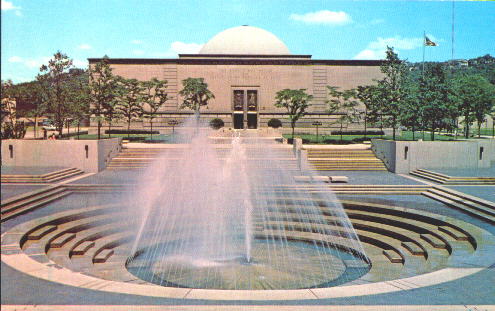
Photo from postcard sold at Buhl Planetarium in the 1970s, showing Buhl Planetariium fronted by the Allegheny Square Fountain
Photograph from the 1970s of Pittsburgh's original Buhl Planetarium and Institute
of Popular Science with the fountain of Allegheny Square Plaza in the foreground.
Thursday's Partial Eclipse of the Sun falls on the eve of the 75th anniversary of
the dedication of Buhl Planetarium. (Image Source: Friends of the Zeiss)

By Glenn A. Walsh
Reporting for SpaceWatchtower

A Partial Eclipse of the Sun or Solar Eclipse, visible throughout most of North America, will occur Thursday Afternoon, 2014 October 23 between 3:37 and 7:52 p.m. EDT / 19:37 and 23:52 Coordinated Universal Time. This Solar Eclipse occurs on the eve of the 75th anniversary of the dedication of Pittsburgh's original Buhl Planetarium and Institute of Popular Science.

The western portion of North America will receive the best view of this eclipse, while the eclipse occurs very close to sunset in the eastern part of the continent. Internet web-casts are the safest way to view a Solar Eclipse, and may be the only practical way for people in the eastern part of North America.

In south suburban Pittsburgh, safe public viewing, free-of-charge, of this Partial Solar Eclipse will be displayed, via a live Internet web-cast, in a meeting room of the Mount Lebanon Public Library, located at 16 Castle Shannon Boulevard near Washington Road at the southern end of the Mount Lebanon Uptown Business District. This special event is co-sponsored by Friends of the Zeiss and the Mount Lebanon Public Library.

Normally, Friends of the Zeiss would try to show the eclipse to the general public using a telescope on the Library grounds, weather-permitting. However, as the eclipse begins in the Pittsburgh region so close to sunset, regular telescope views of the eclipse are not practical. Hence, we are providing the public with an Internet web-cast of the event.

An Eclipse of the Sun or Solar Eclipse occurs at the New Moon phase of the Moon, when the Moon comes between the Earth and the Sun and blocks out some or all of the light from the Sun on part of the Earth's surface.

WARNING: Observing the Sun or a Solar Eclipse with a telescope, binoculars, or any other type of optical device should only be attempted by people who have received the proper training and possess the proper equipment to do so safely. Looking at the Sun or a Solar Eclipse without the proper training and special equipment would cause PERMANENT BLINDNESS INSTANTLY ! Blindness could come without pain, as there are no nerves in the eyes.

This Solar Eclipse occurs on the eve of the 75th anniversary of Pittsburgh's original Buhl Planetarium and Institute of Popular Science, America's fifth major planetarium with the historic Zeiss II Planetarium Projector, the first such projector to be placed on an elevator. The Solar Eclipse event at the Mount Lebanon Public Library will include a celebration of the Buhl Planetarium milestone.

Friends of the Zeiss is a non-profit organization with the mission to promote Astronomy, Space, and related sciences as well as the history and preservation of the historic building, apparatus, and artifacts of Pittsburgh's original Buhl Planetarium and Institute of Popular Science.

For people who cannot attend the Library Solar Eclipse event, the Solar Eclipse can be safely viewed at the following Internet web-casts:

Griffith Observatory, Los Angeles:
Link >>> http://new.livestream.com/GriffithObservatoryTV

Coca-Cola Space Science Center, Columbus GA: Link >>> http://www.ccssc.org/webcast.html

Slooh Community Observatory: Link >>> http://events.slooh.com/

For a method of safely viewing the Solar Eclipse, check-out this Internet web site:
Link >>> http://andrewcarnegie.tripod.com/solflyer2.htm . 
 
For further questions about safely viewing the Solar Eclipse, contact:
Electronic Mail >>> < solareclipse@planetarium.cc > or Telephone 412-561-7876.

More on the October 23 Solar Eclipse ---

"Two Eclipses in One Month!!" - Blog of James Mullaney, former Buhl Planetarium Curator of Exhibits & Astronomy: Link >>> http://blog.scientificsonline.com/2014/09/two-eclipses-in-one-month/

NASA ---
Link 1 >>> http://science.nasa.gov/science-news/science-at-nasa/2014/17oct_sunseteclipse/
Link 2 >>> http://eclipse.gsfc.nasa.gov/SEsearch/SEsearchmap.php?Ecl=20141023

Wikipedia.org >>> http://en.wikipedia.org/wiki/Solar_eclipse_of_October_23,_2014

News Release regarding the Library Solar Eclipse Event:
Link >>> http://buhlplanetarium.tripod.com/fotz/news/releases/NR-soleclipse20141023.html

More on the history of Pittsburgh's original Buhl Planetarium and Institute of Popular Science:
Link >>> http://www.planetarium.cc

Walsh, Glenn A. 
"WHEN PITTSBURGH GOT ITS PLANETARIUM<br>
"The 75th anniversary of America's 5th major planetarium."<br>
<u>Planetarian</u> 2014 December: 50. 
A history of Pittsburgh's original Buhl Planetarium and Institute of Popular Science starting on page 50 of the .pdf file<br>
of this article in the Quarterly Journal of the International Planetarium Society.
Link >>> http://c.ymcdn.com/sites/www.ips-planetarium.org/resource/resmgr/planetarian/201412planetarian.pdf 


Radio Interviews (2) of Glenn A. Walsh Regarding the 75th Anniversary of Buhl Planetarium -

* "Preview: Buhl Planetarium 75th Anniversary."</a> <i>The Saturday Light Brigade / Neighborhood Voices</i>.<br>
WRCT-FM 88.3 Carnegie Mellon University, Pittsburgh (and network of 5 Western Pennsylvania and<br>
Eastern Ohio college radio stations) 2014 Oct. 25.
Radio interview occurred in the studios of The Saturday Light Brigade, located in Bowdish Gallery of<br>
Pittsburgh's original Buhl Planetarium and Institute of Popular Science building.
Link >>> http://neighborhoodvoices.org/preview-buhl-planetarium-75th-anniversary
 
* "Wednesday Rundown: Celebrating the Birthday of the Original Buhl Projector." Essential Pittsburgh.
WESA-FM 90.5 Pittsburgh 2014 Oct. 22.
Link >>> http://wesa.fm/post/wednesday-rundown-celebrating-birthday-original-buhl-projector 
 
Link to other articles and references regarding the 75th anniversary of Pittsburgh's original Buhl Planetarium and Institute of Popular Science:
Link >>> http://buhlplanetarium.tripod.com/75years/quickhistory.html#75news 

Related Blog Posts ---

Buhl Planetarium Scale-Model Joins Miniature Railroad and Village  (2014 Nov. 27): Link >>> spacewatchtower.blogspot.com/2014/11/buhl-planetarium-scale-model-joins.html

75th Anniversary of America's 5th Major Planetarium  (2014 Oct. 24):

Link >>> http://spacewatchtower.blogspot.com/2014/10/75th-anniversary-of-americas-5th-major.html

Asteroid Named for Henry Buhl of Buhl Planetarium  (2014 June 26):

Link >>> http://spacewatchtower.blogspot.com/2014/06/asteroid-named-for-henry-buhl-of-buhl.html

Buhl Community Park at Allegheny Square Opens  (2012 June 25):

Link >>> http://spacewatchtower.blogspot.com/2012/06/buhl-community-park-at-allegheny-square.html

70th Anniversary: Buhl Planetarium Observatory (2011 Nov. 19):

Link >>> http://spacewatchtower.blogspot.com/2011/11/70th-anniversary-buhl-planetarium.html


Source: Glenn A. Walsh, Reporting for SpaceWatchtower, a project of Friends of the Zeiss.

2014: 75th Year of Pittsburgh's Buhl Planetarium Historic Zeiss II Planetarium Projector at Pittsburgh's original Buhl Planetarium and Institute of Popular Science.


Want to receive SpaceWatchtower blog posts in your inbox ?
Send request to < spacewatchtower@planetarium.cc >..

gaw

Glenn A. Walsh, Project Director,
Friends of the Zeiss < http://buhlplanetarium.tripod.com/fotz/ >
Electronic Mail - < gawalsh@planetarium.cc >
SpaceWatchtower Blog: < http://spacewatchtower.blogspot.com/ >
Also see: South Hills Backyard Astronomers Blog: < http://shbastronomers.blogspot.com/ >
Barnestormin: Writing, Essays, Pgh. News, & More: < http://www.barnestormin.blogspot.com/ >
About the SpaceWatchtower Editor / Author: < http://buhlplanetarium2.tripod.com/weblog/spacewatchtower/gaw/ >
SPACE & SCIENCE NEWS, ASTRONOMICAL CALENDAR:
< http://buhlplanetarium.tripod.com/#news >
Twitter: < https://twitter.com/spacewatchtower >
Facebook: < http://www.facebook.com/pages/SpaceWatchtower/238017839577841?sk=wall >
Author of History Web Sites on the Internet --
* Buhl Planetarium, Pittsburgh:
  < http://www.planetarium.cc >
* Adler Planetarium, Chicago:
  < http://adlerplanetarium.tripod.com >
* Astronomer, Educator, Optician John A. Brashear:
  < http://johnbrashear.tripod.com >
* Andrew Carnegie & Carnegie Libraries:
  < http://www.andrewcarnegie.cc >
* Civil War Museum of Andrew Carnegie Free Library:
  < http://garespypost.tripod.com >
* Duquesne Incline cable-car railway, Pittsburgh:
  < http://inclinedplane.tripod.com >
* Public Transit:
  < http://andrewcarnegie2.tripod.com/transit >

Saturday, October 18, 2014

'Beautiful' Orionid Meteor Shower Peaks Tuesday

Waking up before sunrise is a good way to get a head start on the day. On Oct. 21st, waking up before sunrise could stop you in your tracks.

Blame Halley’s Comet.  Every year in mid-to-late October, Earth passes through a stream of dusty debris from Comet Halley, and the pre-dawn sky can light up with a pretty display of shooting stars.

splash
Orionid meteors fly out of a radiant near the shoulder of Orion, the Hunter.  In this sky map, the radiant is denoted by a red dot. Although the meteors emerge from a single point, they can appear anywhere in the sky. Image credit: Dr. Tony Phillips [Larger image

"We expect to see about 20 meteors per hour when the shower peaks on Tuesday morning, Oct 21st," says Bill Cooke, the head of NASA's Meteoroid Environment Office.  "With no Moon to spoil the show, observing conditions should be ideal."

Because these meteors streak out of the constellation Orion, astronomers call them "Orionids."

"The Orionid meteor shower is not the strongest, but it is one of the most beautiful showers of the year," notes Cooke.

More - Link >>> http://science.nasa.gov/science-news/science-at-nasa/2014/17oct_orionids/

Source: NASA Science News.

2014: 75th Year of Pittsburgh's Buhl Planetarium Historic Zeiss II Planetarium Projector at Pittsburgh's original Buhl Planetarium and Institute of Popular Science.


Want to receive SpaceWatchtower blog posts in your inbox ?
Send request to < spacewatchtower@planetarium.cc >..

gaw

Glenn A. Walsh, Project Director,
Friends of the Zeiss < http://buhlplanetarium.tripod.com/fotz/ >
Electronic Mail - < gawalsh@planetarium.cc >
SpaceWatchtower Blog: < http://spacewatchtower.blogspot.com/ >
Also see: South Hills Backyard Astronomers Blog: < http://shbastronomers.blogspot.com/ >
Barnestormin: Writing, Essays, Pgh. News, & More: < http://www.barnestormin.blogspot.com/ >
About the SpaceWatchtower Editor / Author: < http://buhlplanetarium2.tripod.com/weblog/spacewatchtower/gaw/ >
SPACE & SCIENCE NEWS, ASTRONOMICAL CALENDAR:
< http://buhlplanetarium.tripod.com/#news >
Twitter: < https://twitter.com/spacewatchtower >
Facebook: < http://www.facebook.com/pages/SpaceWatchtower/238017839577841?sk=wall >
Author of History Web Sites on the Internet --
* Buhl Planetarium, Pittsburgh:
  < http://www.planetarium.cc >
* Adler Planetarium, Chicago:
  < http://adlerplanetarium.tripod.com >
* Astronomer, Educator, Optician John A. Brashear:
  < http://johnbrashear.tripod.com >
* Andrew Carnegie & Carnegie Libraries:
  < http://www.andrewcarnegie.cc >
* Civil War Museum of Andrew Carnegie Free Library:
  < http://garespypost.tripod.com >
* Duquesne Incline cable-car railway, Pittsburgh:
  < http://inclinedplane.tripod.com >
* Public Transit:
  < http://andrewcarnegie2.tripod.com/transit >