Thursday, June 19, 2014

Summer Begins Saturday Morning at 6:51 a.m. EDT

File:North season.jpg

The Earth at the start of the 4 (astronomical) seasons as seen from the north and ignoring the atmosphere (no clouds, no twilight). Front left: Summer Solstice for the Northern Hemisphere. Rear right: Summer Solstice for the Southern Hemisphere. (Image Source: Wikipedia.org )

By Glenn A. Walsh
Reporting for SpaceWatchtower


The moment of the Summer Solstice, heralded as the beginning of the season of Summer in Earth's Northern Hemisphere (and the season of Winter in the Southern Hemisphere), will be early Saturday Morning, 2014 June 21, at 6:51 a.m. Eastern Daylight Saving Time (EDT) / 10:51 Coordinated Universal Time (UTC). A little more than a week earlier came the Full Moon on Friday the 13th.

In etymology, the word solstice comes from the Latin terms sol (Sun) and sistere (to stand still). In ancient times, astronomers / astrologers / priests recognized that on one day of the year (in the Northern Hemisphere, near the day we now call June 21), the Sun would appear to reach its highest point in the sky for the year. The motion of the Sun's apparent path in the sky (what is known astronomically, today, as the Sun's declination) would cease on this day, before reversing direction.

Today, we know that, while the Sun does have motions, it is actually the motion of the Earth, tilted on its axis 23.44 degrees while revolving around the Sun, that causes the Earth's seasons. Hence, as the Earth arrives at the point in its orbit around the Sun, when the north polar axis is most directly inclined toward the Sun, this marks the Summer Solstice in the Northern Hemisphere.

Alternately, the Winter Solstice, in the Northern Hemisphere, occurs when the Earth reaches the point in its orbit when the north polar axis is most directly inclined away the Sun. And, conversely, at this time Summer begins in the planet's Southern Hemisphere.


Although the Summer months in the Northern Hemisphere are known for the year's warmest weather, the Earth is actually at the point in its orbit farthest from the Sun (astronomically known as the point of
aphelion) around July 5; the Earth's closest approach to the Sun (perihelion) each year is around January 2. Solar radiation, and hence the heat from the Sun, depends on the length of daylight and the angle of the Sun above the horizon. The tilt of the planet's axis toward the Sun determines the additional and more direct solar radiation received by a planet's northern or southern hemisphere, and hence, the warmer season of the respective hemisphere.

The Vernal Equinox, when the season of Spring begins in the Northern Hemisphere, occurs between the Winter and Summer Solstices when the Earth reaches the point in its orbit around the Sun when the Earth's axis is inclined neither toward nor away from the Sun. Likewise, when the Earth reaches the point in its orbit around the Sun when the Earth's axis is inclined neither toward nor away from the Sun, between the Summer and Winter Solstices, this is known as the Autumnal Equinox. And, half-way between the beginning points of each season are Cross-Quarter Days, related to the traditional holidays of Groundhog Day, May Day, Lammas Day (traditionally, first harvest festival of the year on August 1), and Halloween Day.

In ancient times, the Summer Solstice was known as Midsummer Day, in earlier calendars celebrated around June 24. Such early European celebrations were pre-Christian in origin. Many will associate this ancient holiday with the famous William Shakespeare play, A Midsummer Night's Dream. Some speculate that the play was written for the Queen of England, to celebrate the Feast Day of Saint John.

As with the Roman Catholic Church's decision to christianize the pagan Winter Solstice festivals with the introduction of Christmas Day on December 25, the Church began to associate the Midsummer festivals with the Nativity of Saint John the Baptist on June 24. In the Bible, the Gospel of Saint Luke implies that John was born six months before the birth of Jesus, although no specific birth dates are provided.

More on the Summer Solstice -
Link 1 >>> http://scienceworld.wolfram.com/astronomy/SummerSolstice.html
Link 2 >>> http://en.wikipedia.org/wiki/Summer_solstice

More on the Season of Summer: Link >>>
http://en.wikipedia.org/wiki/Summer

More on the history of Midsummer: Link >>>
http://en.wikipedia.org/wiki/Midsummer

Summer "Solstice Day" Annual Free-of-Charge Day, 1985 to 1991, at Pittsburgh's original Buhl Planetarium and Institute of Popular Science (a.k.a. Buhl Science Center):

Link >>> http://buhlplanetarium2.tripod.com/Buhlexhibits.htm#solstice

Related Blog Post ---

Friday the 13th Full Moon !  (2014 June 12):

Link >>> http://spacewatchtower.blogspot.com/2014/06/friday-13th-full-moon.html


Special Thanks: Eric G. Canali, former Floor Manager of Pittsburgh's original Buhl Planetarium and Institute of Popular Science and Founder of the South Hills Backyard Astronomers amateur astronomy club.


Source: Glenn A. Walsh, Reporting for SpaceWatchtower, a project of Friends of the Zeiss.


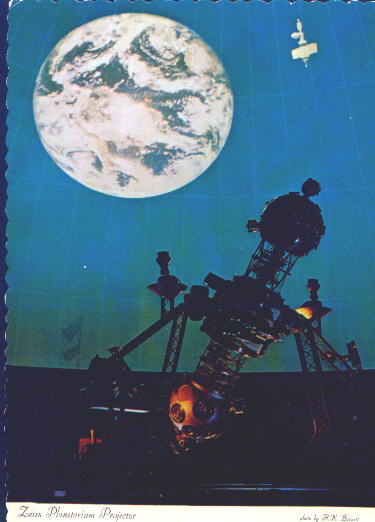
2014: 75th Year of Pittsburgh's Buhl Planetarium Historic Zeiss II Planetarium Projector at Pittsburgh's original Buhl Planetarium and Institute of Popular Science.

Want to receive SpaceWatchtower blog posts in your inbox ?
Send request to < spacewatchtower@planetarium.cc >..

gaw

Glenn A. Walsh, Project Director,
Friends of the Zeiss < http://buhlplanetarium.tripod.com/fotz/ >
Electronic Mail - < gawalsh@planetarium.cc >
About the SpaceWatchtower Editor / Author: < http://buhlplanetarium2.tripod.com/weblog/spacewatchtower/gaw/ >
SpaceWatchtower Blog: < http://spacewatchtower.blogspot.com/ >
Also see: South Hills Backyard Astronomers Blog: < http://shbastronomers.blogspot.com/ >
Barnestormin: Writing, Essays, Pgh. News, & More: < http://www.barnestormin.blogspot.com/ >
SPACE & SCIENCE NEWS, ASTRONOMICAL CALENDAR:
< http://buhlplanetarium.tripod.com/#news >
Twitter: < https://twitter.com/spacewatchtower >
Facebook: < http://www.facebook.com/pages/SpaceWatchtower/238017839577841?sk=wall >
Author of History Web Sites on the Internet --
* Buhl Planetarium, Pittsburgh:
  < http://www.planetarium.cc >
* Adler Planetarium, Chicago:
  < http://adlerplanetarium.tripod.com >
* Astronomer, Educator, Optician John A. Brashear:
  < http://johnbrashear.tripod.com >
* Andrew Carnegie & Carnegie Libraries:
  < http://www.andrewcarnegie.cc >
* Civil War Museum of Andrew Carnegie Free Library:
  < http://garespypost.tripod.com >
* Duquesne Incline cable-car railway, Pittsburgh:
  < http://inclinedplane.tripod.com >
* Public Transit:
  < http://andrewcarnegie2.tripod.com/transit >

Tuesday, June 17, 2014

CMU Part of Time / Computer Synchronization Project

Principal and co-principal investigators of the Roseline project (clockwise from top left): UCLA's Mani Srivastava and Sudhakar Pamarti; UCSD's Rajesh Gupta; Carnegie Mellon's Ragunathan Rajkumar and Anthony Rowe; UC Santa Barbara's João Hespanha and Thomas Schmid from the University of Utah. Image: Doug Ramsey, UC San Diego
Principal and co-principal investigators of the Roseline project (clockwise from top left): UCLA's Mani Srivastava and Sudhakar Pamarti; UCSD's Rajesh Gupta; Carnegie Mellon's Ragunathan Rajkumar and Anthony Rowe; UC Santa Barbara's João Hespanha and Thomas Schmid from the University of Utah. Image: Doug Ramsey, UC San Diego.


Pittsburgh's Carnegie Mellon University, along with four other universities, are participating in a new National Science Foundation-funded project, to improve time synchronization in advanced computer systems.

The National Science Foundation has announced a five-year, $4 million award to tackle the challenge of synchronizing time in cyber-physical systems (CPS), which are systems that integrate sensing, computation, control and networking into physical objects and infrastructure.
 
Examples of cyber-physical systems include autonomous cars, aircraft autopilot systems, tele-robotics devices and energy-efficient buildings, among many others.

The grant brings together expertise from five universities and establishes a center-scale research activity to improve the accuracy, efficiency, robustness and security with which computers maintain knowledge of time and synchronize it with other networked devices in the emerging "Internet of Things."

Time has always been a critical issue in science and technology. From pendulums to atomic clocks, the accurate measurement of time has helped drive scientific discovery and engineering innovation throughout history. For example, advances in distributed clock synchronization technology enabled GPS satellites to precisely measure distances. This, in turn, created new opportunities and even entirely new industries, enabling the development of mobile navigation systems. However, many other areas of clock technology are still ripe for development.

Time synchronization presents a particular fundamental challenge in emerging applications of CPS, which connect computers, communication, sensors and actuator technologies to objects and play a critical role in our physical and network infrastructure. Cyber-physical systems depend on precise knowledge of time to infer location, control communication and accurately coordinate activities. They are critical to real-time situational awareness, security and control in a broad and growing range of applications.

"The National Science Foundation has long supported research to integrate cyber and physical systems and has supported the experimentation and prototyping of these systems in a number of different sectors—from transportation and energy to medical systems," said Farnam Jahanian, head of NSF's Directorate for Computer and Information Science and Engineering. "As the 'Internet of Things' becomes more pervasive in our lives, precise timing will be critical for these systems to be more responsive, reliable and efficient."

The NSF award will support a project called Roseline, which seeks to develop new clocking technologies, synchronization protocols, operating system methods, as well as control and sensing algorithms. The project is led by engineering faculty from the University of California, Los Angeles (UCLA), and includes electrical engineering and computer science faculty from the University of California, San Diego; Carnegie Mellon University; the University of California, Santa Barbara and the University of Utah.

More - Link >>> http://www.rdmag.com/news/2014/06/new-effort-revolutionize-time-keeping-cyber-physical-systems?et_cid=3997816&et_rid=544605860&location=top

Sources: National Science Foundation, R & D Magazine.

2014: 75th Year of Pittsburgh's Buhl Planetarium Historic Zeiss II Planetarium Projector at Pittsburgh's original Buhl Planetarium and Institute of Popular Science.


Want to receive SpaceWatchtower blog posts in your inbox ?
Send request to < spacewatchtower@planetarium.cc >..

gaw

Glenn A. Walsh, Project Director,
Friends of the Zeiss < http://buhlplanetarium.tripod.com/fotz/ >
Electronic Mail - < gawalsh@planetarium.cc >
About the SpaceWatchtower Editor / Author: < http://buhlplanetarium2.tripod.com/weblog/spacewatchtower/gaw/ >
SpaceWatchtower Blog: < http://spacewatchtower.blogspot.com/ >
Also see: South Hills Backyard Astronomers Blog: < http://shbastronomers.blogspot.com/ >
Barnestormin: Writing, Essays, Pgh. News, & More: < http://www.barnestormin.blogspot.com/ >
SPACE & SCIENCE NEWS, ASTRONOMICAL CALENDAR:
< http://buhlplanetarium.tripod.com/#news >
Twitter: < https://twitter.com/spacewatchtower >
Facebook: < http://www.facebook.com/pages/SpaceWatchtower/238017839577841?sk=wall >
Author of History Web Sites on the Internet --
* Buhl Planetarium, Pittsburgh:
  < http://www.planetarium.cc >
* Adler Planetarium, Chicago:
  < http://adlerplanetarium.tripod.com >
* Astronomer, Educator, Optician John A. Brashear:
  < http://johnbrashear.tripod.com >
* Andrew Carnegie & Carnegie Libraries:
  < http://www.andrewcarnegie.cc >
* Civil War Museum of Andrew Carnegie Free Library:
  < http://garespypost.tripod.com >
* Duquesne Incline cable-car railway, Pittsburgh:
  < http://inclinedplane.tripod.com >
* Public Transit:
  < http://andrewcarnegie2.tripod.com/transit >

Saturday, June 14, 2014

Mullaney Astronomy Book Now Published in Dutch & German

James Mullaney 'Celebrating the Universe!' book in English, Dutch, and German
Celebrating the Universe! by former Buhl Planetarium Astronomy Curator James Mullaney
is now available in the Dutch and German languages, as well as in English.

By Glenn A. Walsh
Reporting for SpaceWatchtower

The book, Celebrating the Universe!  by James Mullaney, published in English last year, has now been published in the Dutch and German languages.

Celebrating the Universe! goes beyond science to explain the personal benefits of communing with the night sky. Perhaps the first book of its kind, this book also goes into little known aspects of stargazing including therapeutic relaxation, celestial meditation, and looking at astronomy from a spiritual perspective.

The author, James Mullaney, is a lifelong astronomer who has served as Curator of Exhibits and Astronomy at Pittsburgh's original Buhl Planetarium and Institute of Popular Science and Staff Astronomer at the Allegheny Observatory. He was also Director of the DuPont Planetarium on the campus of the University of South Carolina, Aiken.

Recently, Mr. Mullaney also published the article, "Stargazing Simplified," in the April issue of Sky and Telescope Magazine. According to Mr. Mullaney, this article, about getting back to basics and the simple joy of astronomical observing, has received the most enthusiastic response of any article he has written for the magazine--and, he has been writing for Sky and Telescope Magazine since 1962!

More & How to Order Book -
Paperback Book: Link >>> http://www.hayhouse.com/details.php?id=8292
E-Book Format: Link >>> http://www.hayhouse.com/details.php?id=8291

Related Blog Posts ---

Former Buhl Planetarium Curator Jim Mullaney To Be On National Radio  (2013 June 26):

Link >>> http://spacewatchtower.blogspot.com/2013/06/former-buhl-planetarium-curator-jim.html


New Mullaney Book: "Celebrating the Universe!"  (2013 May 18):

Link >>> http://spacewatchtower.blogspot.com/2013/05/new-mullaney-book-celebrating-universe.html


Source: Glenn A. Walsh, Reporting for SpaceWatchtower, a project of Friends of the Zeiss.

2014: 75th Year of Pittsburgh's Buhl Planetarium Historic Zeiss II Planetarium Projector at Pittsburgh's original Buhl Planetarium and Institute of Popular Science.


Want to receive SpaceWatchtower blog posts in your inbox ?
Send request to < spacewatchtower@planetarium.cc >..

gaw

Glenn A. Walsh, Project Director,
Friends of the Zeiss < http://buhlplanetarium.tripod.com/fotz/ >
Electronic Mail - < gawalsh@planetarium.cc >
About the SpaceWatchtower Editor / Author: < http://buhlplanetarium2.tripod.com/weblog/spacewatchtower/gaw/ >
SpaceWatchtower Blog: < http://spacewatchtower.blogspot.com/ >
Also see: South Hills Backyard Astronomers Blog: < http://shbastronomers.blogspot.com/ >
Barnestormin: Writing, Essays, Pgh. News, & More: < http://www.barnestormin.blogspot.com/ >
SPACE & SCIENCE NEWS, ASTRONOMICAL CALENDAR:
< http://buhlplanetarium.tripod.com/#news >
Twitter: < https://twitter.com/spacewatchtower >
Facebook: < http://www.facebook.com/pages/SpaceWatchtower/238017839577841?sk=wall >
Author of History Web Sites on the Internet --
* Buhl Planetarium, Pittsburgh:
  < http://www.planetarium.cc >
* Adler Planetarium, Chicago:
  < http://adlerplanetarium.tripod.com >
* Astronomer, Educator, Optician John A. Brashear:
  < http://johnbrashear.tripod.com >
* Andrew Carnegie & Carnegie Libraries:
  < http://www.andrewcarnegie.cc >
* Civil War Museum of Andrew Carnegie Free Library:
  < http://garespypost.tripod.com >
* Duquesne Incline cable-car railway, Pittsburgh:
  < http://inclinedplane.tripod.com >
* Public Transit:
  < http://andrewcarnegie2.tripod.com/transit >

Thursday, June 12, 2014

Friday the 13th Full Moon !

Photo of the full moon over the Temple of Poseidon in Greece.
June Full Moon rising over Greece's Temple of Poseidon in 2008.
(Image Source: National Geographic Society)

By Glenn A. Walsh
Reporting for SpaceWatchtower

The Full Moon in June of 2014 occurs shortly after Midnight, in the Eastern Time Zone, on Friday the 13th: at precisely 12:11 a.m. EDT / 4:11 Coordinated Universal Time.

A honey-hued-color Full Moon, around the time of the Summer Solstice (which will occur June 21, 6:51 a.m. EDT / 10:51 UTC), may have led to the traditional term of "Honeymoon," as weddings were traditionally held in June, when the good weather days of Summer would begin. The term "Honeymoon" can be traced as far back as 1552. At that time, marriage was compared to the phases of the Moon, with a Full Moon analogous to the wedding, the most happy time of a relationship.

To the Algonquin Indians of North America, the June Full Moon was known as the Strawberry Moon. This was due to the relatively short harvest season for strawberries, which always came in June.

In the Northern Hemisphere, the June Full Moon is also known as the Flower Moon and the Corn-Planting Moon. In Europe, the June Full Moon was known as the Rose Moon.

In the Southern Hemisphere, where the season of Winter is about to begin, the June Full Moon is known as the Oak Moon, Cold Moon, and Long-Night's Moon.

Almost two days after Full Moon, at the end of Flag Day (June 14) at 11:00 p.m. EDT / June 15, 3:00 UTC, the Moon reaches perigee, the closest point in its orbit to the Earth, at a distance of 362,065 kilometers. So even two days earlier, the Full Moon may appear a little larger than normal.

Also, remember that if you display the American Flag on Flag Day (as recommended by the Flag Code), the Flag Code does suggest that the Flag should be taken off of display by local sunset (long before the Moon perigee), unless there is artificial lighting of the Flag for nighttime display (Sunset for Pittsburgh: June 14, 8:52 p.m. EDT / June 15, 0:52 UTC).

The superstition surrounding Friday the 13th (which dates to the 19th century) seems to be an amalgamation of two superstitions from earlier in history: the number "13" as an unlucky number and the day "Friday" as an unlucky day.

In the 1960s, the Pittsburgh-produced, national children's television program, "Mister Rogers' Neighborhood," used a puppet to end this superstition in the minds of children. In the long-time PBS program (which actually started airing nationally on the earlier National Educational Television network), King Friday the 13th was the monarch of the "Neighborhood of Make-Believe."

Program creator Fred Rogers got the idea for the puppet character, when he participated in an earlier program, "Children's Corner," which began broadcasting on the local Pittsburgh educational television station, WQED-TV channel 13, in 1954.

More on the Full Moon: Link >>> http://en.wikipedia.org/wiki/Full_moon

More on Full Moon names ---
Link 1 >>> http://earthsky.org/astronomy-essentials/full-moon-names
Link 2 >>> http://en.wikipedia.org/wiki/Full_moon#Harvest_and_Hunter.27s_moons
Link 3 >>> http://www.farmersalmanac.com/full-moon-names/

More on the Honeymoon: Link >>> http://en.wikipedia.org/wiki/Honeymoon

More on Flag Day (National Flag Foundation, Pittsburgh):
Link >>>  http://www.usflag.org/history/flagday.html

More on Friday the 13th --
Astronomical: Link >>> http://scienceworld.wolfram.com/astronomy/FridaytheThirteenth.html
Superstition: Link >>> http://en.wikipedia.org/wiki/Friday_the_13th
King Friday the 13th: Link >>> http://en.wikipedia.org/wiki/King_Friday_XIII#Regular_puppets

Source: Glenn A. Walsh, Reporting for SpaceWatchtower, a project of Friends of the Zeiss.

2014: 75th Year of Pittsburgh's Buhl Planetarium Historic Zeiss II Planetarium Projector at Pittsburgh's original Buhl Planetarium and Institute of Popular Science.


Want to receive SpaceWatchtower blog posts in your inbox ?
Send request to < spacewatchtower@planetarium.cc >..

gaw

Glenn A. Walsh, Project Director,
Friends of the Zeiss < http://buhlplanetarium.tripod.com/fotz/ >
Electronic Mail - < gawalsh@planetarium.cc >
About the SpaceWatchtower Editor / Author: < http://buhlplanetarium2.tripod.com/weblog/spacewatchtower/gaw/ >
SpaceWatchtower Blog: < http://spacewatchtower.blogspot.com/ >
Also see: South Hills Backyard Astronomers Blog: < http://shbastronomers.blogspot.com/ >
Barnestormin: Writing, Essays, Pgh. News, & More: < http://www.barnestormin.blogspot.com/ >
SPACE & SCIENCE NEWS, ASTRONOMICAL CALENDAR:
< http://buhlplanetarium.tripod.com/#news >
Twitter: < https://twitter.com/spacewatchtower >
Facebook: < http://www.facebook.com/pages/SpaceWatchtower/238017839577841?sk=wall >
Author of History Web Sites on the Internet --
* Buhl Planetarium, Pittsburgh:
  < http://www.planetarium.cc >
* Adler Planetarium, Chicago:
  < http://adlerplanetarium.tripod.com >
* Astronomer, Educator, Optician John A. Brashear:
  < http://johnbrashear.tripod.com >
* Andrew Carnegie & Carnegie Libraries:
  < http://www.andrewcarnegie.cc >
* Civil War Museum of Andrew Carnegie Free Library:
  < http://garespypost.tripod.com >
* Duquesne Incline cable-car railway, Pittsburgh:
  < http://inclinedplane.tripod.com >
* Public Transit:
  < http://andrewcarnegie2.tripod.com/transit >

Tuesday, June 10, 2014

Sunspot Count Max Finally Arrives, But 'Mini-Max'

Years ago, in 2008 and 2009 an eerie quiet descended on the sun.  Sunspot counts dropped to historically-low levels and solar flares ceased altogether.  As the longest and deepest solar minimum in a century unfolded, bored solar physicists wondered when "Solar Max" would ever return.

They can stop wondering. "It's back," says Dean Pesnell of the Goddard Space Flight Center.  "Solar Max has arrived."

splash
A new ScienceCast video examines the curious Solar Max of 2014.  Play it
Pesnell is a leading member of the NOAA/NASA Solar Cycle Prediction Panel, a blue-ribbon group of solar physicists who meet from time to time to forecast future solar cycles.  It's not as easy as it sounds. Although textbooks call it the "11-year solar cycle," the actual cycle can take anywhere from 9 to 14 years to complete.  Some Solar Maxes are strong, others weak, and, sometimes, as happened for nearly 70 years in the 17th century, the solar cycle can vanish altogether.

And, experts agree that this Solar Max is not very impressive, more a "mini-max."

More - Link >>> http://science.nasa.gov/science-news/science-at-nasa/2014/10jun_solarminimax/

Source: NASA Science News.

2014: 75th Year of Pittsburgh's Buhl Planetarium Historic Zeiss II Planetarium Projector at Pittsburgh's original Buhl Planetarium and Institute of Popular Science.


Want to receive SpaceWatchtower blog posts in your inbox ?
Send request to < spacewatchtower@planetarium.cc >..

gaw

Glenn A. Walsh, Project Director,
Friends of the Zeiss < http://buhlplanetarium.tripod.com/fotz/ >
Electronic Mail - < gawalsh@planetarium.cc >
About the SpaceWatchtower Editor / Author: < http://buhlplanetarium2.tripod.com/weblog/spacewatchtower/gaw/ >
SpaceWatchtower Blog: < http://spacewatchtower.blogspot.com/ >
Also see: South Hills Backyard Astronomers Blog: < http://shbastronomers.blogspot.com/ >
Barnestormin: Writing, Essays, Pgh. News, & More: < http://www.barnestormin.blogspot.com/ >
SPACE & SCIENCE NEWS, ASTRONOMICAL CALENDAR:
< http://buhlplanetarium.tripod.com/#news >
Twitter: < https://twitter.com/spacewatchtower >
Facebook: < http://www.facebook.com/pages/SpaceWatchtower/238017839577841?sk=wall >
Author of History Web Sites on the Internet --
* Buhl Planetarium, Pittsburgh:
  < http://www.planetarium.cc >
* Adler Planetarium, Chicago:
  < http://adlerplanetarium.tripod.com >
* Astronomer, Educator, Optician John A. Brashear:
  < http://johnbrashear.tripod.com >
* Andrew Carnegie & Carnegie Libraries:
  < http://www.andrewcarnegie.cc >
* Civil War Museum of Andrew Carnegie Free Library:
  < http://garespypost.tripod.com >
* Duquesne Incline cable-car railway, Pittsburgh:
  < http://inclinedplane.tripod.com >
* Public Transit:
  < http://andrewcarnegie2.tripod.com/transit >

Saturday, June 7, 2014

HD Video Beamed From Space Station w/ New Laser-Com Instrument

OPALS and the Moon This animated GIF shows Earth's moon moving below NASA's OPALS laser instrument as seen by a robotic camera on the exterior of the International Space Station. Image credit: NASA/JPL-Caltech
› Full image and caption


NASA successfully beamed a high-definition video 260 miles from the International Space Station to Earth Thursday using a new laser communications instrument.

Transmission of "Hello, World!" as a video message was the first 175-megabit communication for the Optical Payload for Lasercomm Science (OPALS), a technology demonstration that allows NASA to test methods for communication with future spacecraft using higher bandwidth than radio waves.

"The International Space Station is a test bed for a host of technologies that are helping us increase our knowledge of how we operate in space and enable us to explore even farther into the solar system," said Sam Scimemi, International Space Station division director at NASA Headquarters in Washington. "Using the space station to investigate ways we can improve communication rates with spacecraft beyond low-Earth orbit is another example of how the orbital complex serves as a stepping stone to human deep space exploration."

Optical communication tools like OPALS use focused laser energy to reach data rates between 10 and 1,000 times higher than current space communications, which rely on radio portions of the electromagnetic spectrum.

More - Link >>> http://www.jpl.nasa.gov/news/news.php?release=2014-177

Source: NASA / Jet Propulsion Laboratory - California Institute of Technology

Related Blog Post ---

Lunar Laser Com-System Sets Data Transmission Record (2013 Oct. 24):

Link >>> http://spacewatchtower.blogspot.com/2013/10/lunar-laser-com-system-sets-data.html


2014: 75th Year of Pittsburgh's Buhl Planetarium Historic Zeiss II Planetarium Projector at Pittsburgh's original Buhl Planetarium and Institute of Popular Science.


Want to receive SpaceWatchtower blog posts in your inbox ?
Send request to < spacewatchtower@planetarium.cc >..

gaw

Glenn A. Walsh, Project Director,
Friends of the Zeiss < http://buhlplanetarium.tripod.com/fotz/ >
Electronic Mail - < gawalsh@planetarium.cc >
About the SpaceWatchtower Editor / Author: < http://buhlplanetarium2.tripod.com/weblog/spacewatchtower/gaw/ >
SpaceWatchtower Blog: < http://spacewatchtower.blogspot.com/ >
Also see: South Hills Backyard Astronomers Blog: < http://shbastronomers.blogspot.com/ >
Barnestormin: Writing, Essays, Pgh. News, & More: < http://www.barnestormin.blogspot.com/ >
SPACE & SCIENCE NEWS, ASTRONOMICAL CALENDAR:
< http://buhlplanetarium.tripod.com/#news >
Twitter: < https://twitter.com/spacewatchtower >
Facebook: < http://www.facebook.com/pages/SpaceWatchtower/238017839577841?sk=wall >
Author of History Web Sites on the Internet --
* Buhl Planetarium, Pittsburgh:
  < http://www.planetarium.cc >
* Adler Planetarium, Chicago:
  < http://adlerplanetarium.tripod.com >
* Astronomer, Educator, Optician John A. Brashear:
  < http://johnbrashear.tripod.com >
* Andrew Carnegie & Carnegie Libraries:
  < http://www.andrewcarnegie.cc >
* Civil War Museum of Andrew Carnegie Free Library:
  < http://garespypost.tripod.com >
* Duquesne Incline cable-car railway, Pittsburgh:
  < http://inclinedplane.tripod.com >
* Public Transit:
  < http://andrewcarnegie2.tripod.com/transit >

Thursday, June 5, 2014

The Art of Eleanor Walsh Perrine


This is one of the paintings, by artist Eleanor Walsh Perrine (1931 to 2009), on display during the month of June in the Mount Lebanon Public Library in south suburban Pittsburgh.
(Image Source: Friends of the Zeiss; Photographer: Lynne S. Walsh)

By Glenn A. Walsh
Reporting for SpaceWatchtower

An exhibition of 15 paintings by artist Eleanor Walsh Perrine (1931 to 2009) is on display throughout the month of June of 2014, at the Mount Lebanon Public Library, 16 Castle Shannon Boulevard (near Washington Road) at the southern end of the Mount Lebanon business district, in south suburban Pittsburgh.

Eleanor Walsh Perrine, mother of SpaceWatchtower blog author Glenn A. Walsh, developed an interest in art at an early age. While in grade school, Eleanor was awarded yearly scholarships to the Tam O'Shanter Saturday morning art classes at Pittsburgh's Carnegie Institute Museum of Art.

She primarily painted landscapes, and her favorite subject was waterfalls. She and her family traveled all over the United States and Canada to visit different waterfalls, which she would photograph (another of Eleanor's hobbies) and paint from the photographs at home.

Sometimes Eleanor did paint on-site, such as during their annual visits to rural New Hampshire. This occurred while her first husband, William L. Walsh, a research chemist, attended an annual research conference at a college in the small village of New London, New Hampshire.

Other favorite subjects of her photography and art included brooks, mountains, covered bridges, barns, lighthouses, and small-town churches.

This Mount Lebanon Public Library exhibition is open during all library hours throughout the month of June of 2014 ---

Monday through Thursday:  9:00 a.m. to 9:00 p.m. EDT
Friday and Saturday:            9:00 a.m. to 5:00 p.m. EDT
Sunday                                  1:00 to 5:00 p.m. EDT

More on Eleanor Walsh Perrine, including images of some of her paintings:
Link >>> http://andrewcarnegie.tripod.com/ewp/

Special Thanks for assisting with preparation of this exhibition: Lynne S. Walsh, Kiera Thrasher, Sean W. Comunale, and James McKee.

Source: Glenn A. Walsh, Reporting for SpaceWatchtower, a project of Friends of the Zeiss.

2014: 75th Year of Pittsburgh's Buhl Planetarium Historic Zeiss II Planetarium Projector at Pittsburgh's original Buhl Planetarium and Institute of Popular Science.


Want to receive SpaceWatchtower blog posts in your inbox ?
Send request to < spacewatchtower@planetarium.cc >..

gaw

Glenn A. Walsh, Project Director,
Friends of the Zeiss < http://buhlplanetarium.tripod.com/fotz/ >
Electronic Mail - < gawalsh@planetarium.cc >
About the SpaceWatchtower Editor / Author: < http://buhlplanetarium2.tripod.com/weblog/spacewatchtower/gaw/ >
SpaceWatchtower Blog: < http://spacewatchtower.blogspot.com/ >
Also see: South Hills Backyard Astronomers Blog: < http://shbastronomers.blogspot.com/ >
Barnestormin: Writing, Essays, Pgh. News, & More: < http://www.barnestormin.blogspot.com/ >
SPACE & SCIENCE NEWS, ASTRONOMICAL CALENDAR:
< http://buhlplanetarium.tripod.com/#news >
Twitter: < https://twitter.com/spacewatchtower >
Facebook: < http://www.facebook.com/pages/SpaceWatchtower/238017839577841?sk=wall >
Author of History Web Sites on the Internet --
* Buhl Planetarium, Pittsburgh:
  < http://www.planetarium.cc >
* Adler Planetarium, Chicago:
  < http://adlerplanetarium.tripod.com >
* Astronomer, Educator, Optician John A. Brashear:
  < http://johnbrashear.tripod.com >
* Andrew Carnegie & Carnegie Libraries:
  < http://www.andrewcarnegie.cc >
* Civil War Museum of Andrew Carnegie Free Library:
  < http://garespypost.tripod.com >
* Duquesne Incline cable-car railway, Pittsburgh:
  < http://inclinedplane.tripod.com >
* Public Transit:
  < http://andrewcarnegie2.tripod.com/transit >